
Pro Tour: Electrification and Exterior Insulation of Occupied Historic Renovation
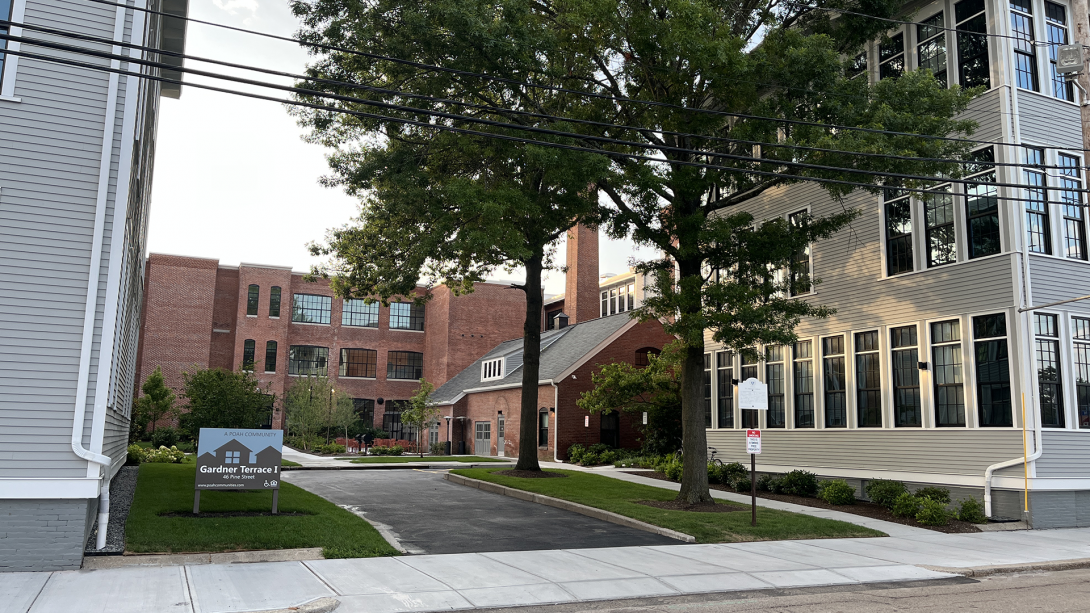
Attleboro, MA
United States
AIA, Phius (pending)
Join NESEA for a Pro Tour of an occupied 19th century factory building undergoing a re-renovation and electrification using historic tax credits. There are numerous points of interest in this project, including updating to air-to-water electric heating and cooling with minimized refrigerant distribution. Previously, the central system provided heating only to the residents and the maintenance team had to chase leaks seasonally. The gas boilers resulted in high operational impact and cost and ederly residents endured summer heat without cooling in their apartments. The project converted this out-dated, problematic, leaky, fossil fuel boiler system to an electric heat pump system. To minimize refrigerant distribution through the building, the project employs an innovative air-to-water heat pump system with a modular refrigerant-to-water exchange (HEX unit) plant. The project configured equipment in a novel way to allow provision of both heating and cooling to all residents at a much lower impact than the previous system. Additionally, the project team utilized the seemingly impossible combination of Historic Tax Credits and exterior insulation to improve the building's envelope.
Our day will start with an opening presentation from the project team, including the developer and architect, where attendees will learn about the history of this renovation, the vision for the extensive the high-performance work being done there, and the complex financing strategies. Attendees will then break into small groups to tour the building while hearing more from the interdisciplinary team of experts who made it possible. After the tour, we’ll regroup for a reception and Q&A, giving attendees the opportunity to chat with the day’s speakers and each other. We hope to see you there!
More Information
Data: The project realized a 40% reduction in total owner utility *costs* during the first year of operation! Yes, you read that right. That's not just a reduction in site energy, the owner actually realized a significant cost savings after switching to a much more expensive energy source (electric) for heating. Even after switching cooling from the resident meters to the owner meter and extending cooling to 100% of the apartments, the owner still realized an energy costs *savings*.
Providing filtered fresh air ventilation directly to apartments and reliable source-control exhaust from apartments was a major focus of this project. The owner did not except the premise that ventilation distribution cannot be provided in occupied retrofit. Neither did the the design team nor GC. To allow ventilation to reach the apartments spread out along single-loaded corridors, the engineer designed a high-performance ventilation system with multiple ERVs per floor. Historic restrictions would not allow side-wall louvers, so the ERVs at each "stack" share intake and exhaust risers terminating above the roof. This provided a solution acceptable to National Parks Service (NPS), though it was a hard balance to maintain for the project team. Balancing of the system is still ongoing more than a year after start-up.
The project employs an innovative air-to-water VRF heat pump plant to limit refrigerant piping within the building and provide capability for simultaneous heating and cooling with true load shifting (i.e. between heating load zones and cooling load zones). This system is a major part of the energy cost savings and also provided relief from significant maintenance burdens inherent in to the previous boiler-plant-two-pipe-hydronic-fancoil system. But has there been unanticipated challenges with the new system? You'll have to come down to the site to find out.
Special Architectural Features and Materials: This project added massive triple-glazed, large-format, historic replica windows that allowed spaces adjacent to these large windows to be incorporated into the living space. Previously, the space adjacent to these windows was walled off from the interior as a two-season "porch".
Tentative Schedule
| 12:30 PM | Doors open, registration, networking and coffee |
| 1:00 PM | Welcome by NESEA |
| 1:10 PM | Overview of the project by the host |
| 2:00 PM | Tour of project begins; attendees rotate through content-specific stations |
| 3:45 PM | Group reconvenes and travels back to initial meeting point |
| 4:00 PM | Reception with light refreshments |
| 4:15 PM | Q&A panel with members of project team |
| 5:00 PM | Event concludes |
If you have questions about this event, you can contact us via protours@nesea.org.
Interested in sponsoring this event? Learn more here.
To see the full 2026 Pro Tour Series schedule, visit here.