Policy & Codes

PACE Financing: Scaling Commercial and Residential Net-Zero Energy Retrofits

One of the biggest market barriers to net-zero energy retrofits is the incremental upfront cost. Property Assessed Clean Energy (PACE) financing overcomes this barrier, and it’s expanding with new innovations. Those innovations include resilience renovations, consumer protections, and the use of PACE to unlock Net-Zero Energy retrofits and new construction. Resilience renovations are on the rise following hurricanes, floods and power outages. Also, PACE for new construction can make Net-Zero Energy homes beat standard costs for home ownership. Come find out how to grow the market for efficiency and solar in your region from leading industry experts.

Policy Updates: Net Metering and Fixed Charges in the Northeast

Fixed utility charges and net metering policy have a major impact on the economics of rooftop solar and energy efficiency. For a long time these issues were fairly static in the Northeast, but there have been recent proposals by utilities and utility regulators to make dramatic changes to them. This session will give an overview of these proposals and other changes that are currently being discussed in the region.

Stretch Codes: Why this policy offers the best hope for rapid transformation to meet state and local climate goals

This session will look how cities and states are using stretch codes to more rapidly transform local building stock to higher energy efficiency levels, sometimes even driving toward zero energy outcomes. Stretch codes are emerging as a go-to policy lever for cities such as Boulder, Santa Monica, Vancouver, BC, Palo Alto, Washington, DC and states such as New York, Massachusetts and Vermont.

Escalating Excellence in Envelopes: Stories from Practice

There are five basic components of building envelopes, each of which needs increased attention to meet and exceed current Energy Code while providing comfort for building users and durability and resiliency for building owners: 1. Opaque Assemblies - Walls and Roofs 2. Fenestration 3. Air Barriers 4. Thermal Bridging 5. Foundation Insulation and Slab Edges Join Jim and Jodi as they share revealing and entertaining stories from their practice. Engage in a discussion on how the challenges they reveal can be addressed by applying the nine habits of sustainability.

Energy Storage: The Next Frontier

Storage is happening everywhere: behind the meter, in front of the meter, and in autonomous microgrids. Already, storage is addressing the variability in renewable sources of generation, offsetting time-of-use rates and demand charges, reducing peak loads on both sides of the meter, and enabling new levels of resiliency. This session will describe the various battery technologies, their applications and pros and cons, define storage value propositions, discuss “value-stacking” and storage as a service, and present case studies on the many ways storage is now applied across the spectrum.

Should We Stop Trying to Update to the Latest Model Building Energy Code?

States across the Northeast expend significant time and effort in the pursuit of adopting the latest model energy codes from the IECC and ASHRAE. With the 2009 and 2012 model energy codes this resulted in significant improvements in the minimum building standards, but more recently national model codes have produced fewer savings at a time when the need for dramatic energy performance improvements has never been greater.

EnergyVision 2030: A Plan for Changes to our Energy System

Acadia Center’s EnergyVision 2030 analysis explores how the Northeast can reduce carbon emissions to meet 2030 targets that put it on the path to meet 80% by 2050 mandates, which exist in most states. The analysis sets numerical targets in four categories—energy efficiency, electrifying buildings and transportation, greening electric supply, and modernizing the grid.

Plenary, Part II: Methane Leaks, Public Policy, the Future of the Natural Gas Grid -- and the Implications for Your Projects

The public has a hard time knowing what to think about natural gas. Is it a cheap, clean source of energy independence for the US for the rest of the century; a useful bridge fuel until renewables are able to come fully on board in 10 or 20 years; hands-down the best choice for heating buildings in the NESEA region; possibly worse than coal when it comes to greenhouse gas emissions; or all of the above?

Next Generation Energy Efficiency

Utility of the Future… EM&V 2.0… Zero Energy… duck curve! Today’s energy challenges encompass topics far beyond the “bread and butter” of energy efficiency in buildings. After more than 25 years of successful energy efficiency programs, states in the NESEA region are addressing the need to move beyond the traditional energy efficiency model and meet today’s challenges.

Energy Codes and Zero Energy Buildings: Strategies for Today, Tomorrow, and Beyond

New building energy codes have arrived and others are on the horizon. This intensive session begins by introducing the newest codes in the region: specifically the amended IECC2015/ASHRAE 90.1-2013 and updated stretch code in Massachusetts as well as the stretch code and zero energy plan under development in Rhode Island and New York.

The AIA 2030 Commitment: Building Energy Literacy

The AIA 2030 Commitment has impacted not only how we design, but also how firms practice. It has changed the way firms work by integrating performance information into the design process. This session is relevant to both those interested in learning more about the Commitment as well as current signatories, and will cover new tools and developments, such as the online performance tracking tool, the Design Data Exchange.

Retrofitting Residential Properties

One-to-four unit homes present special challenges to energy-efficiency upgrades. Many of these homes were built from 1890—1960 and lack insulation, leak air, and waste energy and water. This panel will share data and solutions to improve the energy- and water- efficiency of these homes, discuss cost-benefit analyses of planned improvements, describe options for testing results of completed upgrades, and explore how to pay for this work.

Using the Building Permitting Process to Accelerate Clean Energy

Traditional clean-energy and energy-efficiency incentive programs wait for people to apply. But what if building permitting, which funnels construction in every city and town, were connected to incentive programs? This session will present ideas to expand integration between incentives and permitting, to streamline the process, and to increase participation in energy-efficiency programs. Bring your ideas to enrich the dialogue.

The Future of Net Zero Energy

Net Zero Energy Buildings have reaching a tipping point. The economic limitations that restricted their success in the past have changed drastically and the technologies needed to achieve Net Zero Energy are now readily available. This session will uncover the strategies and technologies used and the policies and programs in place that are accelerating the uptake of Net Zero Energy Buildings and Communities. This session will also highlight inspiring case studies including project teams’ motivation for pursuing Net Zero Energy Building Certification, how they achieved it and how they maintain performance over time. Brad Liljequist, Technical Director of the Net Zero Energy Program of the Living Building Challenge, will uncover the trends emerging in Net Zero Energy and discuss how each participant can take the lessons learned into their own practice.

Drivers, Trends, and Tools for Healthier Materials Selection

This session will educate participants on drivers, tools, and trends for healthier materials selection. As LEED v4 and the Living Building Challenge's Materials Petal become mainstream, designers are starting to focus on material's environmental and human health impacts. In the past, "green" materials were simply defined by physical attributes: the amount of recycled and regional content, allowable VOC's, etc. Because we are now tasked with demonstrating optimization across the entire supply chain, tools and practices which facilitate "transparency" and maximize designers' decision making capabilities are emerging. This presentation will introduce the following: Red Lists, Environmental Product Declarations (EPD's), Health Product Declarations (HPD's), and extended producer responsibility. Our panel experts include a manufacturer which is promoting these tools and finding many benefits through their supply chain optimization, as well as local practitioners who are developing the tools and guiding their implementation.

Hacking LEED: v4 Innovation and Performance

How will green building practitioners use the updated and mandated LEED v4 to raise the bar on energy & environmental performance in buildings? At the end of October 2016, the current LEED 2009 system will no longer accept new projects and all projects will be registering in v4. Will you be ready? What point and point complexes will help you through the new maze? How do pilot credits and innovation credits fit? Are you watching how legacy projects registered in v2009 are subject to changing requirements even now? Yes​!​ you have heard all about how LEED v4 is coming.

Pricing Sustainability: What Electricity Rate Design Means for the Future of Solar and Efficiency

In recent years, increasing levels of distributed generation have led to challenging questions about how utilities charge customers for the electricity they use. To date, this has largely been a debate between utilities and distributed solar industry and advocates, but the potential impact on energy efficiency is enormous. The session will take a close look at proposed reforms in electric rate design, show how they could change the economics of consumer investments in residential energy efficiency, and recommend what works best for the modern energy consumer. A key topic will be the trend among utilities to increase fixed fees, also known as customer service charges, to levels that impair consumer control over energy costs and disrupt energy efficiency. Also spotlighted will be legislation passed in Connecticut that established a pro-consumer definition of the fixed fee and how that approach might translate to other states in the region. Overall, this session will present a concrete vision for how grid reform can accelerate, not impede, progress on making our buildings highly-energy efficient.

Northeast Solar Policy: What's Coming

Solar policies continue to evolve at breakneck pace, making it challenging to keep on top of all of the latest. Which types of proposals are likely to catch on and drive the industry as it progresses towards maturity? How will solar policies interact with pushes for grid modernization? This session will provide a quick update on the latest in the states with major changes and then a discussion on what three engaged solar policy experts consider the most interesting developments we’ll see in the next year or two (good or bad). We’ll also discuss lessons learned in the last couple years. Come listen in as three of the brightest in the industry push back and engage on the most interesting issues in solar.

Lightning in a Bottle II: Energy Storage Applications, Business Models and Case Studies
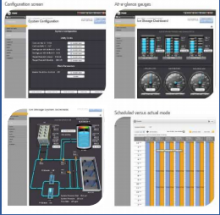
Energy storage technologies are receiving a great deal of attention and investment. This second of two sessions will take a closer look at energy storage applications, business models, case examples, and project development considerations in the Northeast region and nationally. What technologies are being deployed now, under what business models, and what circumstances make sense technically and economically for your project? We will describe energy storage applications for grid support, peak shifting and load leveling, renewable energy integration, microgrids and resilience, and aggregations for demand response. We will consider how energy storage might apply to your projects, clients and communities, and explore value streams and business models for energy storage deployment including third party ownership and power purchase agreements.

Lightning in a Bottle I: Energy Storage Technologies and Markets
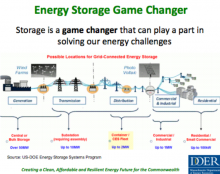
Energy storage technologies such as batteries, flywheels and thermal storage are poised to reshape our energy systems at the scales of the grid, communities, buildings and vehicles, and the relationships between these categories. This first of two sessions will provide an overview of energy storage technologies, applications and markets in the Northeast region and nationally. It will highlight the research from the Massachusetts Department of Energy Resources energy storage study underway. Is the energy storage tipping point truly in sight? What market applications are favorable for which sets of technologies? What impact will storage have on renewable energy deployment? How might electric vehicles mobilize opportunities for energy storage in the built environment? Please join us as we cut through the hype for a lively discussion of developments in this dynamic field.