
BuildingEnergy Access Spotlight Interview: A Square Design


COMPANY SPOTLIGHT: A Square Design
BuildingEnergy Access is a NESEA initiative to support the work of WMBEs (women and minority-owned business enterprises) by connecting them with the resources of the NESEA community. Each month, we'll introduce a participating company to the wider NESEA community through a spotlight interview.
We recently sat down with Anddie Chan-Patera of A Square Design, a minority-owned and operated full-service, Boston-based interior architecture firm, offering design services and project management. We sat down to discuss the business and their participation in the BuildingEnergy Access program...
Ian Reed: Can you share a quick description of your company?
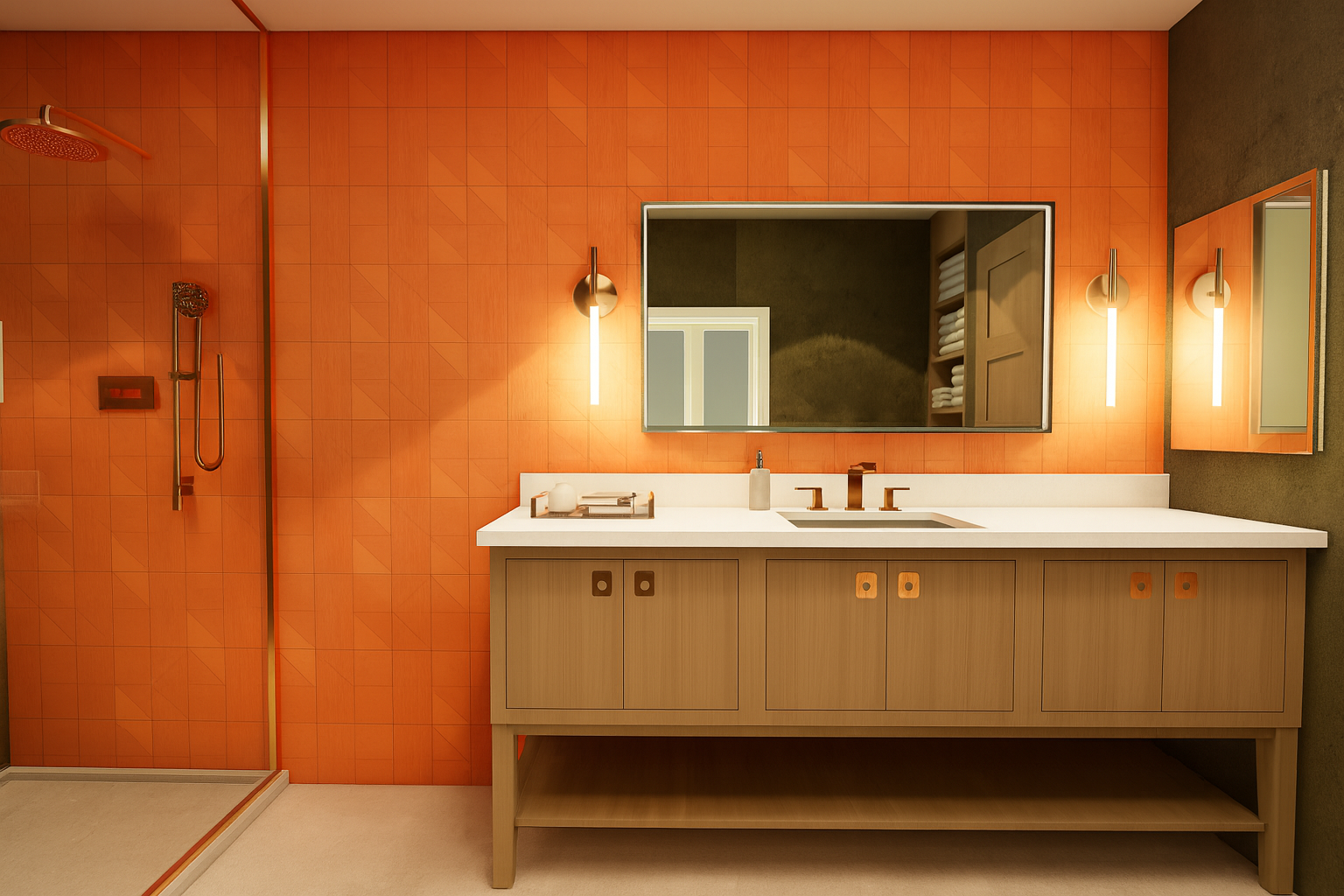 Anddie Chan-Patera: A Square Design is a Boston-based interior architecture firm working across commercial, residential, and mixed-use projects, with a strong focus on affordable and market-rate housing. We are a certified Women Business Enterprise (WBE) and Minority Business Enterprise (MBE), which reflects our values of equity and representation in the design and construction industries. Currently, we are designing a high-performance home in the Berkshires, a project that reflects our commitment to sustainability and energy-efficient design. Our goal is to expand our passive building portfolio in the coming years—starting with private residential homes and then growing into larger sectors such as multi-family housing and community spaces. We believe high-quality, sustainable design should be accessible to all, and we’re excited to bring that philosophy into every project we take on.
IR: How many years have you been in business and what brought you to the field?
ACP: After spending many years at home raising my children, I returned to school to earn my master’s in Interior Architecture. One of my goals was to pursue commercial design, because I felt it was important to hone my skills in that sector before branching into residential work. I launched A Square Design in 2020, right as COVID hit. That timing, surprisingly, worked to our advantage—we won our first project against larger firms because our design stood out, and since then we’ve built ongoing relationships with developers and architects.
IR: Is there a project you’re particularly proud of?
ACP: There are two projects I’m especially proud of. The first is a temporary housing project for immigrants and refugees. We applied trauma-informed design principles, creating spaces that were safe, dignified, and welcoming, but not overly permanent—since residents would eventually move on to their permanent homes. Even with a limited budget and an extremely compressed timeline, we were able to deliver a high-quality design that elevated the daily experience for residents while meeting the client’s practical needs.
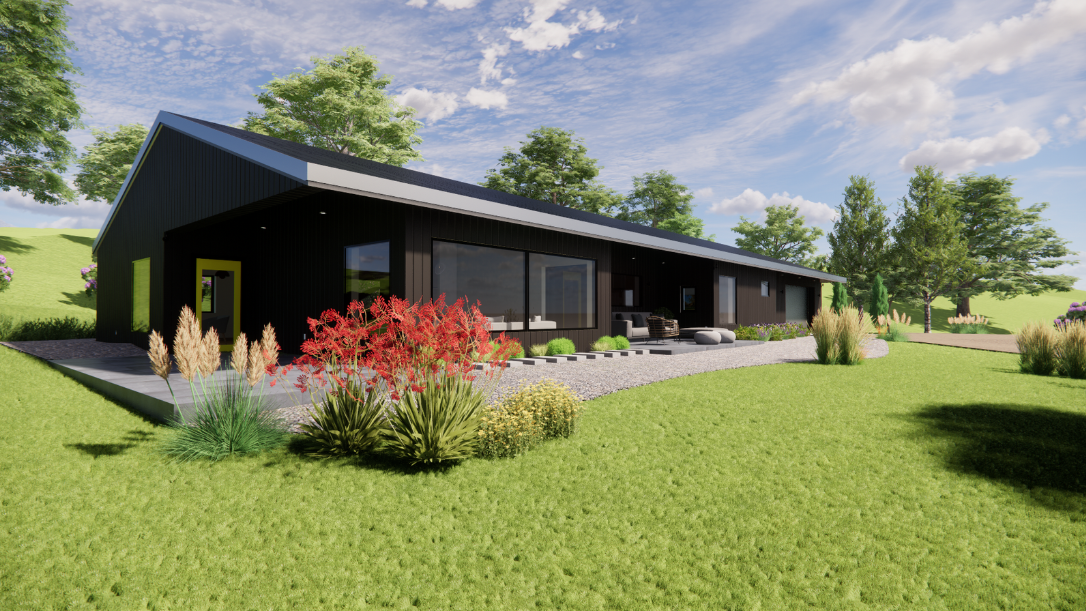
The second is a high-performance home we’re designing in the Berkshires. Our team approached the project from the inside out, ensuring that every interior decision supported the overall performance goals of the house. Working closely with a general contractor deeply committed to Passive House standards gave me a much greater appreciation for the complexity of building this way. With panelized construction, there’s an incredible amount of coordination and precision required before the foundation is even poured. Every opening for windows, doors, and mechanical systems has to be planned in advance, since the wall and roof panels arrive prefabricated and must fit together seamlessly. That level of foresight, collaboration, and technical rigor is intense, but it also results in a home that is healthier, more comfortable, and dramatically more energy-efficient. For us, it was a powerful learning experience and an exciting step toward expanding our passive building portfolio.
IR: What makes A Square Design different? How have you differentiated the business?
ACP: We design from the inside out. Architects often start with the exterior, but people live in the interiors. We get involved early, shaping layouts and amenity spaces strategically with the team. Because we’re a small firm, we’re more agile—we don’t have multiple layers of bureaucracy slowing us down. That allows us to respond to clients much quicker, adjust to changes on the fly, and think creatively about solutions within real-world constraints. Our size gives us flexibility, and our focus on creativity means we can deliver high-quality, thoughtful design that feels custom, even on tight budgets and schedules.
 Another important part of our foundation came in my first year of starting the firm, when I had the opportunity to work closely with an architect for over a year. It was an incredible experience that allowed me to dive deep into the architectural side of the process. We were trained on architectural software and I took on a lot of the drawing work that architects are more traditionally responsible for. That experience reinforced my decision to return to school for my degree in Interior Architecture. Mastering the software became a powerful tool—it gave our firm credibility and the technical capacity to collaborate with large architectural firms on multifamily housing projects
IR: Can you talk a little about building your team and how has that process developed?
ACP: I started with a partner, then grew by hiring directly from the Boston Architectural College, where I studied. The school’s mission is to give anyone a second chance to pursue architecture and design, regardless of background or prior experience. That philosophy resonates with me personally—it gave me the opportunity to return to school after many years at home raising my children, and it opened the door to a new career path I never thought possible.
At A Square Design, I carry that mission forward. I’ve built my team by hiring students and recent graduates from BAC, offering them real-world project experience that many firms might hesitate to provide so early in their careers. For me, it’s about giving young designers the same chance I was given—to learn, to explore, and to grow into their profession. Most of the students who start with us stay on and continue to develop their skills as part of the firm.
I also bring many years of technology and management experience from financial services and higher education, which helps me create a professional yet creative environment where emerging designers can thrive. My goal is to foster a collaborative team culture where fresh perspectives, technical training, and creativity come together to produce high-quality work.
IR: I'm curious to hear more about your experience with BuildingEnergy Access. How has that been for you?
ACP: It’s been invaluable. The coaching has pushed me to think more strategically about growth, financial planning, and hiring responsibly. It’s helped me plan ahead, rather than simply reacting to challenges as they arise. I’ve also been building my professional network with other like-minded business owners through the program. Learning from Team TrAction (FKA Cohort 2) has been an amazing experience—their guidance combines practical business strategies with a real understanding of the challenges we face as small firms.
What I value most is the honesty and openness within the group. We’re able to share our experiences candidly, whether it’s a success, a setback, or something we’re still figuring out. That kind of authentic exchange is rare, and it’s incredibly powerful. Not only do I learn from others’ journeys, but I also gain the confidence to approach my own business decisions with more clarity and foresight. It feels less isolating when you know others are navigating similar challenges, and that sense of community has been just as impactful as the coaching itself.
IR: Have you participated in any other NESEA programming?
ACP: Yes, BuildingEnergy Boston. It was the first conference where I felt my time was truly well spent—I learned Passive House fundamentals, discovered new products, and built meaningful connections. I had just started working on my first high-performance home, so my understanding of the issues was still developing. Listening to experts articulate the challenges, explain the science, and walk through strategies for evaluating and addressing them was an incredible learning moment for me. It gave me a much clearer framework for how to approach these projects in the future.
I’ve also participated in NESEA’s Pro Tours, which have been both inspiring and practical. Last week, I attended one in Revere that focused on climate-ready building design. Hearing directly from the architect and landscape architect about how they approached flood resilience and site challenges was fascinating and very relevant to my own work. These events are not just informative—they create opportunities to engage with peers, exchange ideas, and bring those lessons back into my practice. For me, they’ve been invaluable professional development experiences.
IR: Thank you for taking the time to chat today, it was really cool to meet you and learn about your business
ACP: Thank you.