
Simple Technologies: Compost Hot Water Heating

The following series of posts provides lessons learned from a 2 week Permaculture Design Course in Chiang Mai, Thailand. By taking very simple steps, we can all take control over simple technologies and free resources to simplify our lives.
Compost Hot Water Heating
There is a simple way to harness free energy from living organisms. The simple process of composting food scraps and yard waste uses microbes to break down organic matter into rich soil. The byproduct of this reaction is heat.
By following a simple method, you can capture the heat and use it to heat water. This water can be used in hydronic heating systems, or provide hot water for showers.
Step 1: Gather composting material consisting of:
- 50% brown matter such as straw, hay, leaves, etc.
- 50% green matter such as weeds and food scraps or high nitrogen content material such as cow manure
Step 2: Lay a layer of sticks on the ground to support the compost pile and allow for free airflow beneath the pile
Step 3: Provide a layer of brown matter a couple inches thick and water the pile. Then provide a layer of green matter a couple inches thick and water the pile
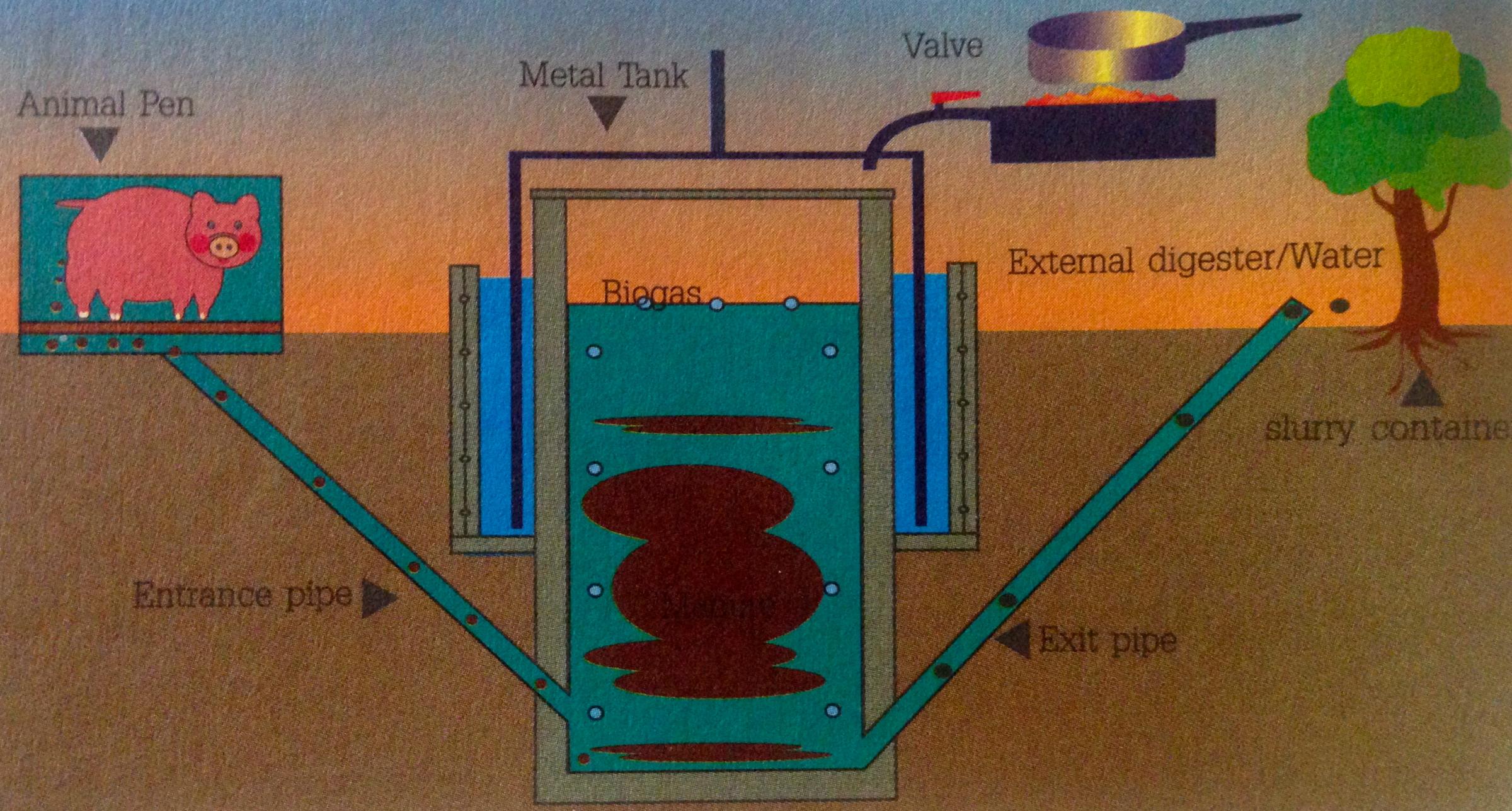 Simple floating drum digester diagram for agricultural applications. Image provided by Heifer International Thailand. Similar systems can be setup to replace septic tanks, or handle backyard wastes and scraps.
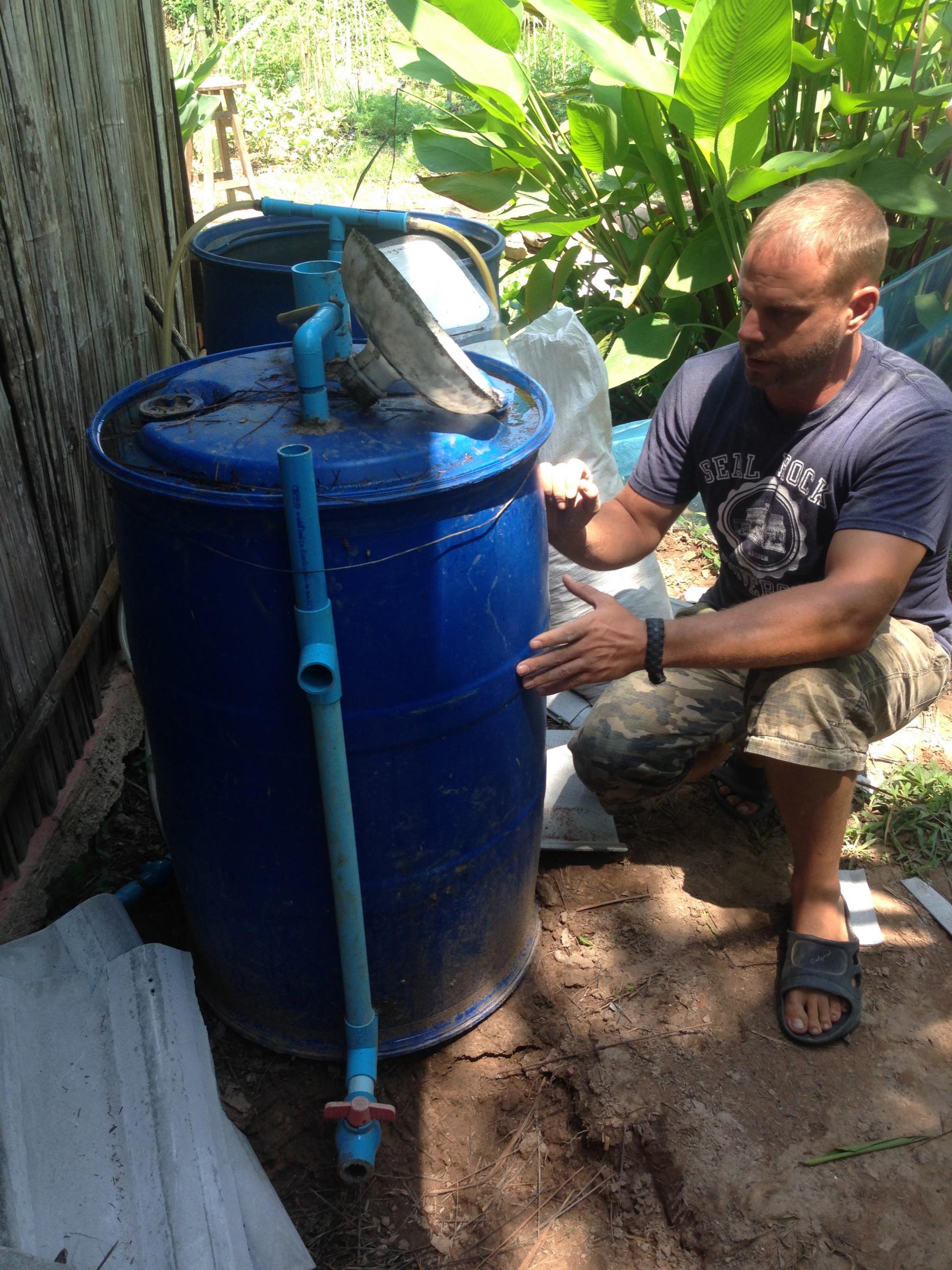 The biogas digester is demonstrated at the Panya Project in Northern Thailand