
In Conversation: An Interview with Former NESEA Executive Director, Alex Wilson
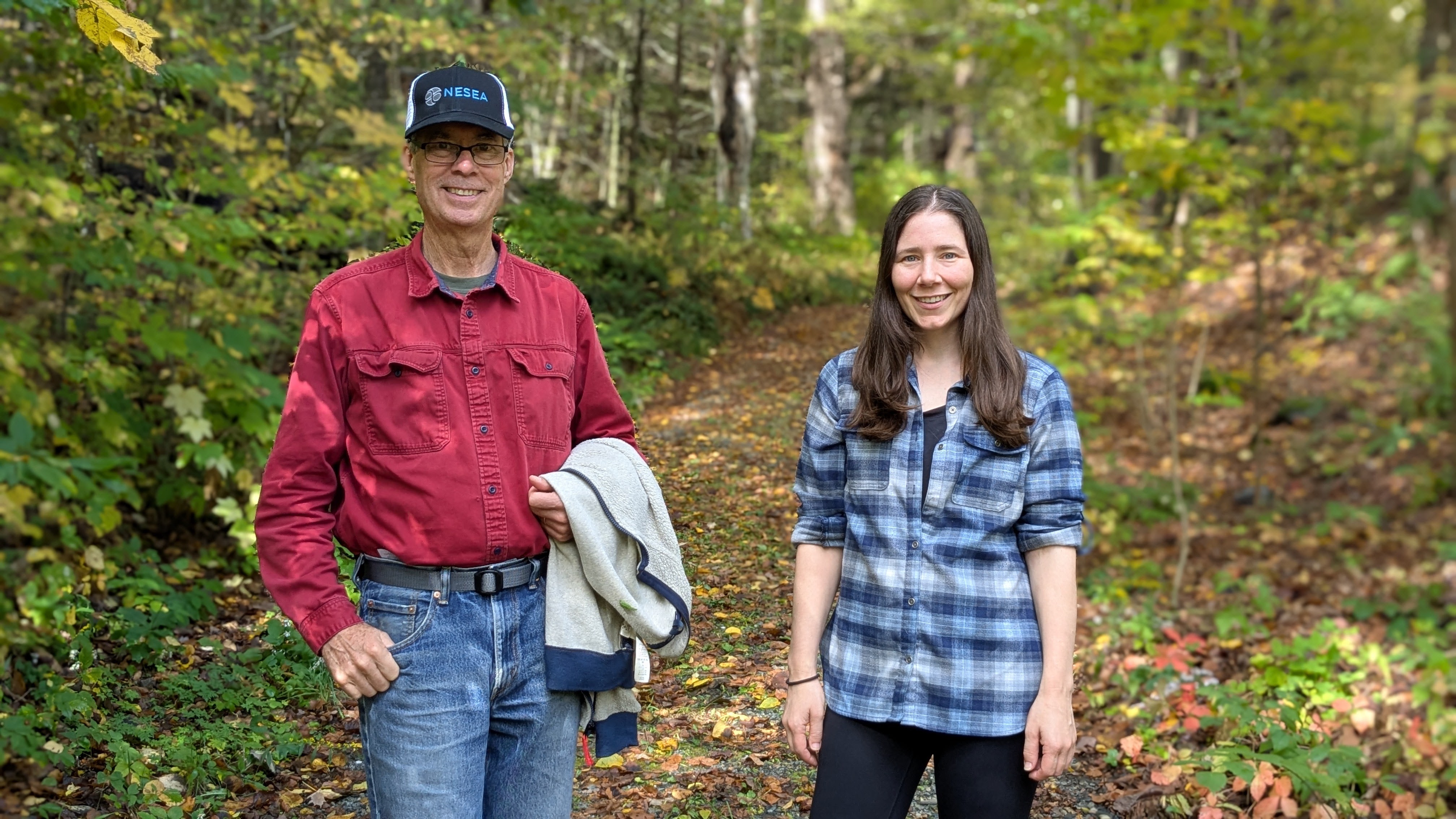
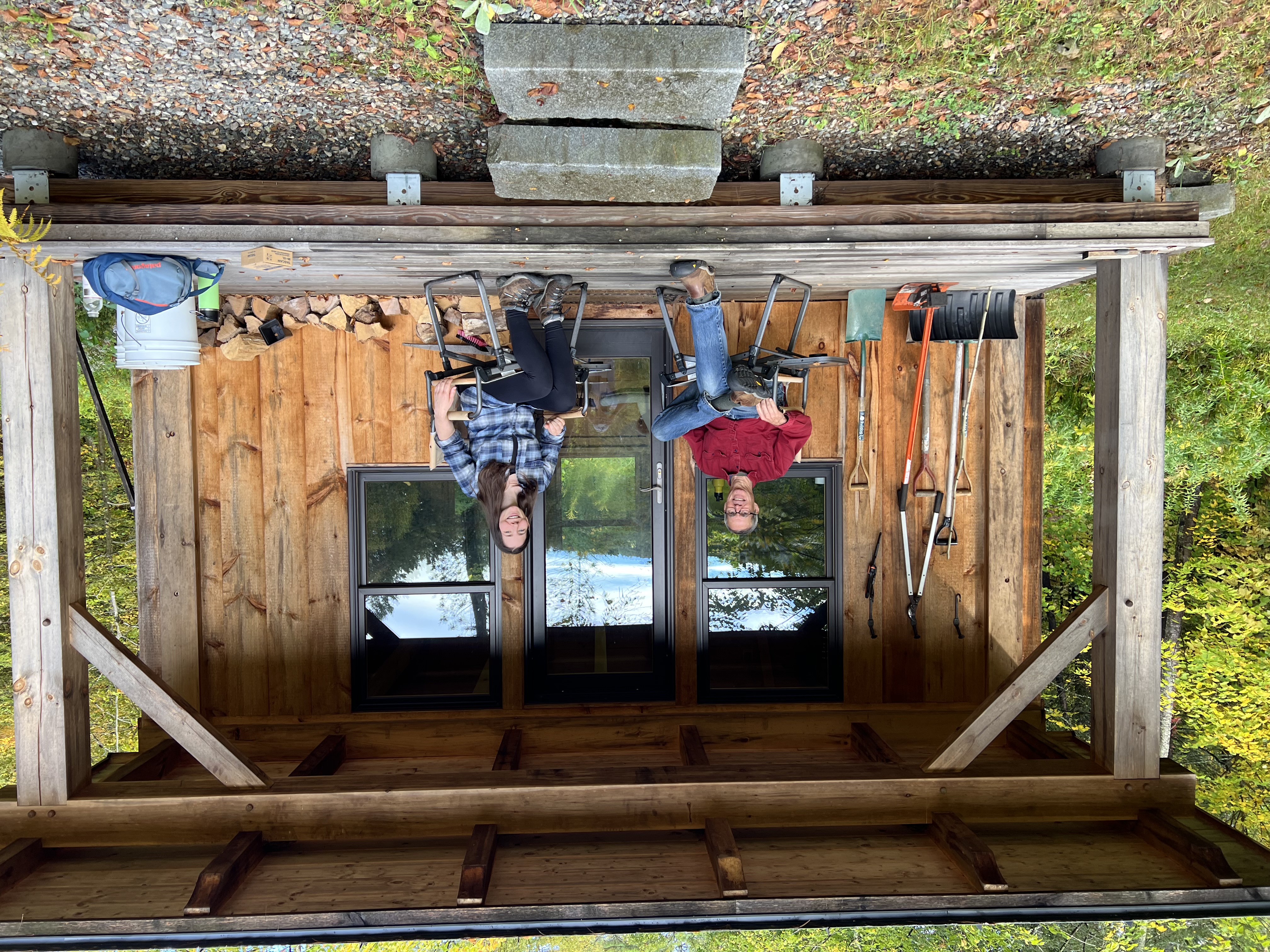
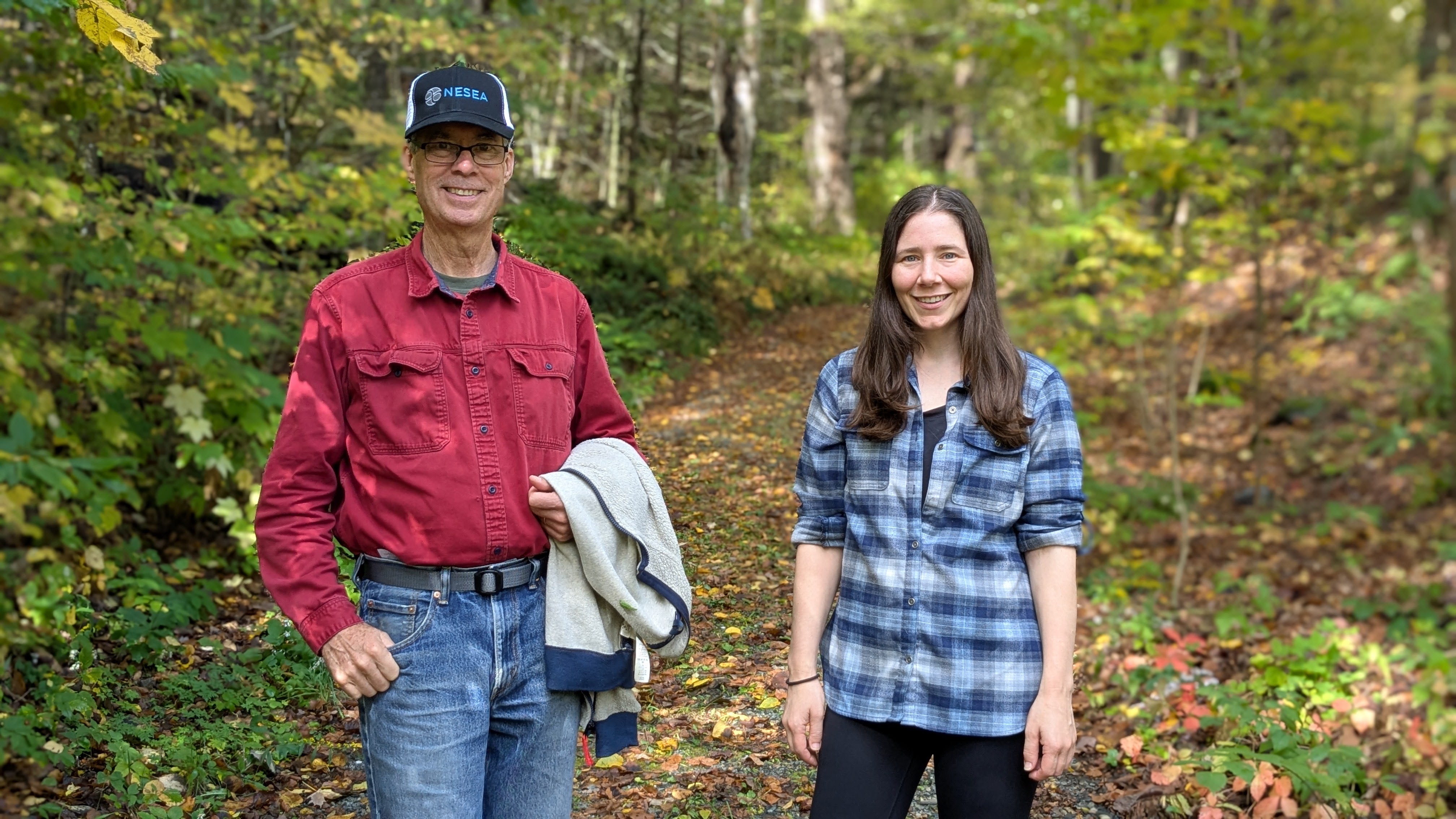
As part of our 50th Anniversary celebrations, we thought it would be fun and interesting to facilitate a conversation between one of our first Executive Directors, Alex Wilson, and our current Executive Director, Florence MacGregor. Alex was kind enough to invite us up to his farm in Vermont, where we chatted about the early days of NESEA, what brought Alex to the role, and how things have changed and developed in the industry since then.
Florence MacGregor: Thank you for letting us invite ourselves over to talk to you as part of our 50th anniversary, which is essentially what we did. Let’s call a spade a spade.
Alex Wilson: <laugh>
FM: One of the things I learned from our email conversation was that you weren’t our first executive director, but you were our first paid executive director. So, can you tell us a little bit about how you came into NESEA and what the organization was like when you got there?
 AW: Sure. Well, I'm not sure that I was the first paid executive director. I think Tom Minnon may have been paid, but he was pretty short term, I don't know, maybe six months.
At the time, it was mostly a volunteer organization. It had started back in the 74-75 period, from people that were involved in a solar development that was going to be happening in a little town called Brookline, Vermont. It was going to be called Grassybrook Village, as I recall, and it was going to be really the first solar development in the country. It was well underway in construction, and then the bank pulled the funding for it and it died midstream. Not long after I started as Executive Director, I went up there to see where they had been building it. It was kind of surreal, seeing the remains of these buildings melting into the landscape.
It was active solar at that time, so it was going to be a big solar water heating system and thermal storage - really complicated and probably wouldn't have been very successful technically. But, that was the motivation to pull a bunch of people together who were interested in solar after the first energy crisis in 1973. And that became an organizing focus of NESEA in the early years.
When I started, I had been working in the late seventies in Santa Fe, New Mexico for the New Mexico Solar Energy Association. I got involved with them after college. One of the people I'd worked with on a project studying energy self-sufficiency, ended up in Santa Fe and convinced me to apply for a job there, which I did, in 1978. I was there for several years, and in 1980 I was ready to move back east. Ironically, it was too sunny in Santa Fe <laugh>. You always felt you needed to be outside hiking or something, you know, there weren't any rainy Sunday mornings to just read the paper <laugh>.
So, anyway, I made the decision to leave NMSEA at some point, and I was doing a trip around the Northeast to figure out where I might like to land. I had started doing some writing in New Mexico for a local newspaper on energy, a solar column. Someone I had met at solar conferences, John Hayes, was living in Marlboro, Vermont, teaching chemistry and environmental studies at Marlboro College. I think I'd crashed on his floor once or twice at a solar conference. He invited me over and we had dinner; maybe I spent the night. I'd been over in Bennington, VT looking at that as a possible place to move to, thinking I was going to try my hand at being a writer. I'd looked at Bennington and then came over to the Brattleboro area.
I had just finished telling John about how I'd been working for this nonprofit for three years and was thinking of getting more into writing and leaving the nonprofit world. And he said, “oh, that's too bad. I wanted to see if you would apply for the executive directorship of NESEA.” He was chairman of the board of NESEA at the time. (At that point it was called the New England Solar Energy Association.)
I was really flattered and humbled by John’s suggestion that I apply for the position. I was 25 years old. I'd worked at a nonprofit organization, but didn't really know anything about fundraising or administration, and it was a pretty overwhelming thought to run a nonprofit. NESEA had maybe six employees.
But I thought about it and ultimately decided to apply. I had a couple one-on-one interviews, including with Drew Gillett, and was then interviewed by the full board at the Fifth National Passive Solar Conference in Amherst, referred to as Passive 80. And that was a huge conference. It was, at that point, the biggest conference related to renewable energy that had ever been held.
 FM: Was that conference being run just by NESEA?
AW: No, it was jointly sponsored by NESEA and ASES, the American Solar Energy Society. But I think NESEA really ran the logistics of it. ASES probably had the technical committee that picked who was going to present, but I think NESEA ran the conference. And that's when Tom Minnon had been director, but I think, for some reason he left as the conference was being organized. And so, with no executive director, the board of directors kind of ran this conference. John Hayes was probably spending 30 or 40 hours a week on that, in addition to teaching at Marlboro College, so they were really ready to have an executive director.
I was interviewed at the conference in their hospitality suite. It was people like Bruce Anderson, who was the founder of Solar Age Magazine - really well known in the solar world, so fairly intimidating. But I was chosen and started in October of 1980—a greenhorn, but enthusiastic.
FM: You actually answered my next question, because I was going to ask how many people are on staff. You said there were six people?
AW: There were six for a short while, but Ronald Reagan was elected president a month after I started and one of the first things he did when inaugurated was to eliminate the regional Solar Energy Centers that were part of the Department of Energy, including the Northeast Regional Solar Energy Center. That entity had provided at least 50% of NESEA's budget. On top of that, when I was interviewed by the board at Passive 80, the expectation was that there would be about a hundred thousand dollars in net revenue from the conference. NESEA would come out of the conference with this big cash cushion. We had a repeating grant from DOE, and we were rolling in money, so things were pretty rosy.
But then Reagan was elected. When he started the presidency in January of 1981, he eliminated that funding. Plus, that hundred thousand dollars the conference was expecting to net ended up being more like $10,000.
So, I had to face this challenging fiscal reality really quickly in my time as Executive Director, and ended up having to lay off a couple of staff and really restructure the organization to generate revenue.
FM: That's really tough. Good thing history doesn't repeat itself! <nervous laugh>
Hearing that does make me really glad that we are not dependent on federal grants. NESEA doesn’t have any federal grants. It's not any piece of our pie. We have some state grants, but mostly it's revenue generated through the programs, which can be a little scary sometimes, when we're saying “please register for the conference coming up.” (BuildingEnergy NYC is on October 16! -editor) But we have a little bit more control over that than someone on a whim just cutting our funding out of the blue.
AW: In a funny kind of way, it was ultimately a good thing for the organization to lose that federal support, because it forced us to kind of rethink what we were doing. With the board totally running things for a year, they were ready to just hand it off and say, “let us know what you did.” <laugh>. They kind of rubber stamped everything, so I had a lot of freedom to really change the direction of the organization. We broadened the scope away from just solar energy toward other renewables and towards energy efficiency. You know, that was probably the biggest shift - to begin focusing on energy-efficient construction.
We started conferences that were designed to make money, rather than being solely grant funded. We did some great topical conferences. Most significantly was the conference, Energy Efficient Construction—I think that’s what it was called—that was held at Mount Snow in Vermont. That became the first of the Building Energy conferences.
We were basically a conference business at that point, and I spent a lot of time visiting venues and negotiating with hotels and conference facilities. When we looked at Mount Snow, we were planning to have the conference on October 7th. Foliage peaked in late September, maybe extending into the first few days of October. Because of that, we were able to get really good rates on rooms and meeting space. But it so happened that was a really warm autumn, and it was peak foliage during the conference. This was a really spectacular setting for the first BuildingEnergy conference.
With the broadened focus of the organization, we ended up changing the name of the organization from the New England Solar Energy Association to the Northeast Sustainable Energy Association.
FM: Did that change happen when you were the Executive Director, or after?
AW: I think that change was formalized when I was on the board of Directors, so after my time as ED, but we had laid the groundwork for it. There was a long debate about changing the name. People were really attached to the name NESEA, so we cleverly maintained that acronym. So, yeah, that effectively changed while I was Executive Director.
FM: The only suggestions I ever get for a different name was always are trying to torture the acronym, But yes, people, people are still quite attached to the NESEA acronym <laugh>. I also am.
I’m curious - how often do you meet another NESEA member out in the wild?.jpg)
AW: Well, for many years after I left NESEA and started my business, that would eventually become BuildingGreen, I met NESEA people all the time. In fact, NESEA was really the means through which I created that business.
I left NESEA and started doing freelance writing and some technical writing for utility companies and state energy offices. I'd hired a couple of people, but we didn't really land on a name for ourselves until we launched a newsletter: Environmental Building News—the first North American publication focused on the emerging field of green building.
Nadav Malin and I, at the time, were the two main partners in the business. We didn't know anything about publishing, really. I remember that we both read a book, Publish Your Own Newsletter. It was the very beginning of the desktop publishing revolution. PageMaker and McIntosh Computers made it easy for little companies like ours to get started in publishing. It was really dramatic because we could design a newsletter on a computer, print it out on a laser printer, and then go right to press. You didn't have to print out type settings and glue it onto a layout page, and have half tones and printing plates made. Technology really enabled the publishing revolution to happen.
When we thought about this newsletter idea, we didn't know if there would be interest in it. So, we put together a direct mail piece. We figured, “well, if people send checks in, we'll do it. If they don't, we haven't lost that much money.”
The list we used was the NESEA mailing list, which we rented. We sent out, I think, 2000 pieces of direct mail and got a 14% response. In the marketing world today, if you got a tenth that response you'd be jumping up and down. Of course, the reality of direct mail today is way different than it was then. But even then, anything over two or three percent was extraordinary. So, that was a strong message that there was a demand for this. And our first subscribers were mostly NESEA members. We might have had a couple of other lists, but NESEA’s was the primary mailing list we used.
One of our main venues for marketing the publication—for years—was the BuildingEnergy Conference, so NESEA was very much part of our business, and I would run into NESEA people all the time. Many of whom became very close friends. John Abrams, Marc Rosenbaum, Terry Brennan, Mark Kelley….. I became close friends with a lot of those guys.
FM: We know those characters. <laugh>
I've been on NESEA staff for almost 10 years, but not in the same role. Something that we've talked about, more and more, is how to be more inclusive, in terms of the demographics of who participates and who's in the room at our events. Was there any conversation when you were the Executive Director about demographic diversity and who participated or at that point was just getting people on board with the idea of green building?
AW: That's a really good question. There were quite a few women involved, right from day one. Male / female was never as stark a difference as it was in other aspects of the building trades. We had women on the board. I always felt good about that.
While I was Executive Director, I oversaw merging the organizations NESEA with the Mid-Atlantic Solar Energy Association in Philadelphia and the Metropolitan Solar Energy Society, in New York City. And both of those organizations had a lot more racial diversity than NESEA. So when we pulled those organizations together, we did get more diversity into the overall organization.
FM: About what year did that happen?
AW: It was probably around the end of my tenure as Executive Director. I don't remember when that merger finally happened. But well before actually merging the three organizations, we began collaborating and sponsored conferences and workshops together.
We did a fundraising bikeathon that was a lot of fun with the Mid-Atlantic folks. A few of us from New England joined the Mid-Atlantic group, starting in Harrisburg and riding down towards a solar conference in Knoxville, Tennessee. It was fun. Raised some money.
Jim Williams and I biked, with a few other NESEA folks, including Steve Strong’s wife Marilyn.
 FM: To switch topics a little: if you think back, was there a moment you felt especially proud of NESEA?
AW: Every time I would go to a NESEA event and witness the enthusiasm there, the energy level in the conversations, how glad everyone was to get together again, I think that's what made me proudest; creating a venue that pulls people together and creates these friendships that just kept growing and strengthening. You know, that bonding that you referred to.
That's sort of a broad thing, so here’s a specific thing: We did a conference in 1983 that Steve Strong co-chaired and I ran, called “Photovoltaics: from Research to Reality.” That was really a turning point, I think, in the photovoltaics world, where it went from being this very limited application for space satellites and navigation signal buoys with batteries that were super expensive to replace to now reaching a threshold where PVs began to make sense for terrestrial applications, for buildings. Steve was very much a leader in that whole field.
So, I felt really proud of the role that we played with that conference. And Steve's role in furthering the solar electric world has been huge.
FM: This is sort of a funny question, but, in 2075 when NESEA turns 100, what could you imagine NESEA working on? What do you think the future might hold?
AW: Boy. Thinking 50 years ahead, given how quickly things change, is hard to wrap your mind around. I think even in 20 years we will see dramatic change. I think, well before that hundred year anniversary, we will see a pretty dramatic merging of transportation, buildings, and the power grid. I think that's one of the areas where there will be the most radical change, with cars and buildings becoming part of the infrastructure of the power grid. Fossil fuels, I think will largely be gone, except for in pharmaceutical manufacturing maybe, and some raw materials for certain plastics, but I think it will no longer be an energy source. I think we're seeing one of the last gasps, with Trump trying to cling to coal and oil.
You know, in some ways I hope that the need for organizations like NESEA, the need we see today for organizations like this, disappears. But there will be other needs that emerge.
FM: Do you have any advice for me, as the current Executive Director of NESEA?
AW: Keep a sense of humor. Be open to paradigm shifts. You know, just because something's been going in one direction doesn't mean that's the way it needs to keep going.
I think we're at a pretty significant inflection point as a society, with the current administration in Washington trying to dismantle the tenants of government and services the government can provide to society. That's going to make the role of organizations like NESEA even more important, if they can rise to the occasion. It's great that NESEA isn't so dependent on federal funding.
I think if I were in your seat, I might be trying to pull together some of your deep thinkers at the organization to have some all-day brainstorming sessions about the role that NESEA can play in this transformation that's going on in society.
I watched a movie, a screening of a documentary last night, called Gone Guys, about males growing up today and the sociology of what's happening with drug use, suicide, and, you know, these big changes. There's a role that an organization like NESEA can play in providing positive models and occupations for kids growing up today who are kind of lost. I think there's a lot that the organization can do and that you can do in leading it.
FM: As somebody with two little boys, I'll look up this documentary that you're talking about. I learned today that you were thinking of starting a writing business before you started at NESEA, and then obviously you went back to writing after - so, as someone who maybe is really a writer at heart, I wonder what keeps you coming back to NESEA?
AW: I just feel really great about that community of people.