
Cities, Communities, Place

The Magic (Electric) School Bus

Massachusetts is at the forefront of transportation technology with a pilot project that put the nation’s first electric school buses on the road at the end of 2016. We’ll hear from the pilot implementers working with public schools in Amherst, Cambridge, and Concord MA about the pilot goals and technology. From the Massachusetts Dept. of Energy Resources, we’ll learn about operations and data on fuel efficiency, consumption, and costs. Together we’ll consider the future impact and challenges of electric bus fleets. This session takes place on an electric school bus: walk through the hotel lobby, past the front desk, and down the escalator. The bus will be parked at the corner of Fargo Street and D Street. Seating is limited.

Cities as Climate Leaders: Net Zero & the Urgency of Now

With the effects of climate change at our shores, and the federal administration’s decision to pull out of the Paris Agreement, the time for local action is now. In order to avoid the most damaging effects of climate change, GHG emissions must be addressed rapidly and comprehensively. This session will focus on holistic approaches to planning for net zero and tools to help cities and towns set and achieve ambitious climate goals. The audience will learn about tools and resources to help them accelerate their communities toward net zero, best practices from a local practitioner about how to get there, and insights into how to engage the private cleantech sector in supporting that work.

The Future City: An Integrated Ecosystem

The city is an important scale for holistic innovation that can play a major role in global decarbonization. Practitioners can learn to optimize this scale to integrate building-level, streetscape-level, and community-level clean energy ingenuity. Audience members will interact with: a community psychologist who has used a whole systems approach to shape our culture and places for decades; a regional practitioner who helps to usher in smart-city innovation; and a state agency that is working to foster community public-private microgrids. Each participant will leave with 3 action steps to implement a city-scale measure in their ecosystem.

Smart Parking Design as a Climate Tool

Parking creates numerous environmental impacts, including excess energy consumption, urban heat island effect, stormwater runoff, traffic congestion, and pollution. This presentation will illustrate how well-designed and efficient parking structures can dramatically improve a property's carbon footprint by minimizing natural resource use and incorporating green design. Best-in-class parking sustainability standards, including the USGBC's Parksmart Certification, benefit neighborhoods and communities, while maximizing the bottom line. Topics covered will include low-carbon strategies, electric mobility, stormwater management, and green infrastructure.

Deploying Post-Disaster Renewables

Months after Hurricane Maria devastated Puerto Rico, much is unsure about the future of electricity there. We'll offer two perspectives on efforts to deploy renewables in the post-2017-hurricane-season landscape. Will photovoltaics make a large impact in grid-rebuilding? There has been a lot of talk and a lot of on-the-ground hard work. Clearly, islands and regions are following vastly different pathways toward resilience and sustainability. Caribbean islands and nations already on pathways to PV may now be accelerating their efforts. Much work still lies ahead. All in the BuildingEnergy community need to be enlightened as to these efforts and emboldened to participate in ongoing deployment.

Help! I'm Drowning

This session will provide a unique opportunity for sea-level rise to be discussed at three various scales by experts approaching this timely issue in different ways. Shaun O’Rourke, Chief Resiliency Officer for the State of Rhode Island will discuss his on-going efforts at the state level by focusing on sea-level rise, urban heat and flooding. Barnaby Evans, founding-artist of internationally acclaimed WaterFire, will share his work at the city level by touting sea-level rise mitigation as an economic development tool. Stephanie Zurek, of Union Studio Architects will highlight on-going work at the neighborhood level by sharing the impact of sea-level rise on historic Newport, RI from previously published “Keeping History Above Water.”

EnergyVision 2030: A Plan for Changes to our Energy System

Acadia Center’s EnergyVision 2030 analysis explores how the Northeast can reduce carbon emissions to meet 2030 targets that put it on the path to meet 80% by 2050 mandates, which exist in most states. The analysis sets numerical targets in four categories—energy efficiency, electrifying buildings and transportation, greening electric supply, and modernizing the grid.

Resiliency: Energy When You Need It

The floods and hurricanes of 2017 and the winter weather of 2018 all highlight the need for buildings and communities that can withstand natural (and human-made) disasters and continue to provide critical energy needs. The speakers will discuss (1) resiliency in general, (2) how building design professionals can incorporate resiliency into their projects, and (3) examples of communities that are starting to incorporate resiliency into critical infrastructure (microgrids).

The Future City

This facilitated conversation is on the future city and its impact on the practice of NESEA thinkers and practitioners. Historically, BuildingEnergy has focused on isolated parts – the building or a renewable energy installation.  This session will address the whole place like a city or village and what can be done to improve energy efficiency and connectivity among people by integrating all of the parts.

Lessons from Abroad: The Danish Way or the (Bicycle) Highway

This session will dive deep into Danish ideas and solutions we might consider importing to import to Boston and other US cities, despite our very different regulatory environment. Speakers will introduce Denmark's fundamental value of planning for the common and collective good, and will share how the oil market and two back-to-back severe weather events drove this small nation to become a leader on the resiliency front.

The Campus as Crucible for Catalyzing Change

College campuses are leading the transition from fossil fuels to renewable energy at the community level. This session will combine design, technology, and policy with real-life case studies of campuses moving toward carbon neutrality. We’ll present three different colleges in Vermont, Massachusetts, and New Hampshire. What better way to help the rising generation prepare for their own future than to lead the campus, as community, into the clean-energy future?

NESEA Emerging Professionals Career Forum

It's back by popular demand! NESEA's Career Forum is a free resource extended to emerging professionals, graduate and undergraduate students pursuing a career in the high performance building and renewable energy sectors. During this forum, participants will gain insights into the sustainable building sector and strategies for obtaining related positions.  Topics for discussion will include types of careers available, strategies for gaining experience, identifying opportunities, job seeking and networking.

Is Net Zero Energy Net Zero Benefit?
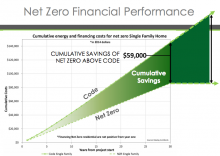
Net Zero Energy (NZE), is generally thought of as the deployment of distributed renewable energy generation at the building/load location. It is offered as a key strategy in the effort to minimize and mitigate global climate change resulting from greenhouse gas emissions. But is this strategy and definition of NZE the best strategy to accomplish these goals for every building? Are there situations when NZE is not an appropriate design objective? What is the best strategy for minimizing global emissions? Should we create a new term instead of NZE? Our panel of energy professionals will present several perspectives on whether or not it makes sense to pursue NZE; or is there a better strategy for how to address net zero emissions.

Does Electric Grid 2.0 Mean Energy Democracy?
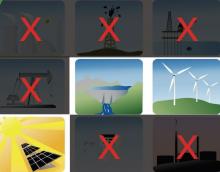
The U.S. energy system is undergoing a remarkable transformation to decentralized and renewable power. Transportation and heating are becoming electrified. Clean, renewable power is growing at an exponential rate and competing on cost with fossil fuel energy sources. Smartphones and automated controls allow an unprecedented decentralization of control. This session explores how the 21st century electric grid can give individual consumers power over their power, but only if the rules are written right.

Living Building Challenge: Historic Building, Modern Lessons

The Living Building Challenge (LBC) can be applied to any building project, including historic renovation and new construction. Charley Stevenson and John Rahill will compare and contrast the LBC renovation of an 18th century plank building to the design and construction of several new LBC buildings.  By examining the three most challenging petals (water, energy and materials) they will illuminate the benefits of and the obstacles to LBC compliance.

The Future of Net Zero Energy
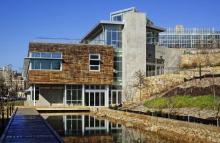
Net Zero Energy Buildings have reaching a tipping point. The economic limitations that restricted their success in the past have changed drastically and the technologies needed to achieve Net Zero Energy are now readily available. This session will uncover the strategies and technologies used and the policies and programs in place that are accelerating the uptake of Net Zero Energy Buildings and Communities. This session will also highlight inspiring case studies including project teams’ motivation for pursuing Net Zero Energy Building Certification, how they achieved it and how they maintain performance over time. Brad Liljequist, Technical Director of the Net Zero Energy Program of the Living Building Challenge, will uncover the trends emerging in Net Zero Energy and discuss how each participant can take the lessons learned into their own practice.

Whole Property Retrofit: Redesigning Suburbia for an Uncertain Energy & Food Future
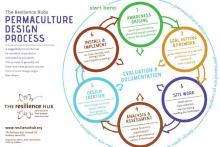
How do we turn the "problem" of suburbia into an enormous opportunity to create a set of resilient systems that can adapt to a changing world? Learn how a holistic design process and a whole-property retrofit in Maine has created a suburban model of living that requires significantly less time, money and energy to run while simultaneously enhancing the thermal comfort and well-being of the residents. This case study presents a transferable suite of findings on efficiency, renewables, integrated landscape elements, food production, transportation and “incremental deep energy retrofitting” which have weaned this eighty-year-old home completely off of fossil fuels.

Highways, Health, and Energy: From City Planning to Air Filtration
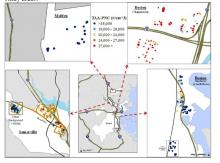
This session will be a workshop focused on design and refinement of strategies to reduce the exposure to traffic-related pollution for people who live and attend school in buildings that are near high-traffic roadways. The presenters will provide an introduction to the scientific research around health and pollution exposure, especially relating to Ultra Fine particulate pollution, as well as providing some initial findings around using building siting and air filtration as effective mitigation strategies. Attendees will be asked to help design and refine more effective strategies for keeping people healthy near highways. There are major questions around how best to filter indoor air in residential settings, how to protect students in active outdoor play, and how to use walls and buildings to shield people from the pollution coming from high-traffic roadways.

A How-to Guide to Carbon-Neutral Cities

At NESEA we know how to make really good buildings. But we can only solve so many problems with better buildings. We need to start working just as collaboratively and thoughtfully on making better cities and regions. In this full-day workshop, you’ll have an opportunity to engage with real-world practitioners from three different countries whose home cities have established quantifiable plans for achieving carbon-neutrality within our lifetimes. The goal of this workshop is to provide participants with the framework and tools to go back to their own communities and do the same. We’ll look at support provided by national, regional, and local governments; the role of carrots and sticks; ways to engage the private sector; and the import of public perception, opposition, and support. Participants will have a chance to review the plans each municipality has developed and challenge the planners with the hard questions about dream versus reality.

Building Blocks for Green Master Planning: A Hands-on Introduction to LEED ND

This engaging, hands-on workshop will give participants a “learning by doing” introduction to sustainable site planning principles and USGBC’s LEED for Neighborhood Development program. The workshop will begin with a short introduction. Then, using case studies developed from actual site designs, participants will complete a series of guided exercises in small teams to develop their own plans for these sites using wooden building blocks on top of the case study site plan. Teams will test development feasibility, do site design, and apply LEED ND credits to their plans. By comparing the workshop team designs and considering the actual plans, participants will explore the many ways that sustainable design principles can be applied to site planning. Teams will also gain experience with applying LEED ND prerequisites and credits to their site plans. This workshop is designed for participants of all skill levels—no prior design or planning experience needed