
Cities, Communities, Place
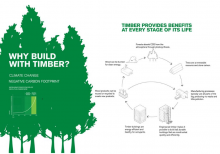
Combating Climate Change with Timber Construction
One City's Energy and Sustainability Vision and Action: Stamford, CT's Energy Improvement District, 2030 District and Pioneering Microgrid and Resilience Project
High-Performance Buildings are Not Enough: An Introduction to High-Performance Cities and the Next Step
The Building Process as Infrastructure
Cities: How are Our Neighbors Doing?
Transportation Infrastructure: Where We Are, How We Must Change
Water: Life Blood of Our Infrastructure
Demand Response Strategies
Microgrid Solutions: From Building to Region
We the People...In Multifamily Buildings!
Active Design and Healthy Housing
Active Design is an evidence-based approach to the development of buildings and communities that uses architecture and urban planning to make physical activity and healthy foods more accessible. Affordable housing represents an ideal target for incorporating these strategies, since lower-income communities are disproportionately affected by obesity and chronic disease, and often have less access to health-supporting resources. This multi-disciplinary panel will share how Active Design supports healthier housing for people of all incomes and abilities.
New York City's Data Revolution
Building owners and decision-makers of New York City’s largest buildings now have more information than ever before to understand their energy consumption and prioritize investments in new equipment and maintenance. Many building owners are undertaking efficiency measures as a result of this information, but they still face a range of obstacles to pursuing building upgrades, such as limited capital, difficulties navigating financing and incentive programs, and the complexities of undertaking energy efficiency upgrades.
Reforming the Energy Vision's (REV's) Effect on You
Balancing Historic Preservation and Energy Performance
Historic New England’s approach to weatherization emphasizes preservation over intervention. But as shown by the energy retrofit that achieved an over 60% reduction in energy usage at the Lyman House, a National Historic Landmark, energy performance and preservation can co-exist. This session will discuss HNE’s preservation philosophy and how it guides the organization’s energy conservation projects. We will share an energy usage analysis of all 36 HNE properties and discuss how that information is used to prioritize actions.
Islands of Power – Microgrids Enabling Technology for Energy Resiliency
While the concept of microgrids and their attributes continue to generate hype, there are few guidelines on microgrid best planning and implementation practices. Microgrids must be able to function on their own (in islanded mode), integrate intermittent generation (such as solar or wind) with baseload generation, and balance overall generation with internal loads. Additionally, interconnection practices with the local utility grid are evolving for behind-the-meter installations.
Responding to the Buckminster Fuller Challenge
The Buckminster Fuller Challenge invites today’s practitioners to answer his call "to make the world work for 100% of humanity, in the shortest possible time, through spontaneous cooperation, without ecological offense or the disadvantage of anyone.” What would Bucky do? Buckminster Fuller’s legacy is alive.
Renewable Energy Powering Local Self-Reliance: Case Studies from Germany
Over 150 villages in Germany produce all of the electricity and most of the heat they consume. In these so-called "bioenergy villages," renewable energy systems are driving economic growth. This session will provide an overview of the growing movement in Germany toward communally-developed and owned energy systems, focusing particularly on two villages in northern Germany. The development process for these villages will be explored, as will the factors contributing to their success.
Reinventing the Water Grid Part II: Nutrient Recycling and Other Opportunities for Fun & Profit
Session two will dig deeper into two solutions – both fresher paths forward than the expensive model of centralized-systems solutions. First is a look into cities such as Atlanta, where the cost of water and wastewater have soared but the system and the treatment technologies are working. Second is the promising practice of source-separating urine for fertilizer production—a pilot in Falmouth, MA is demonstrating cost-effective alternative to building a new treatment plant.
Reinventing the Water Grid Part I: Science, Behavior & Dollars
This session is in two parts.Water is scarcer. Systems for both fresh and waste water are vulnerable. Water standards are increasingly stringent to protect ecosystems and public health. Since water and energy are so inextricably intertwined, the term, “water grid" provides a unique frame for exploring how to operate a more closed-loop system of water production and use. As architects, engineers, builders and municipal planners, what will we have to rethink and re-do about processing fresh and waste water in developing the next generation of the built environment?
Opening Plenary With Keynote Address: Rethinking The Grid - How Our Changing Electrical System Will Impact The Ways We Produce, Distribute And Use Energy
Most of us take the electrical grid for granted. But it is perhaps the most complex technological achievement in human history. After more than a century of relative stability, the grid is changing fast. Our conference plenary will explore the technology and policy solutions evolving to enable a more reliable, resilient, environmentally responsible and affordable electricity grid.
Urban Food Production, Distribution and Energy Recovery
As architects, engineers, and municipal planners, how can we rethink the built environment to install more urban food production and distribution in the city? An urban permaculture will frame the session, discussing practices such as: green roofs, pink houses, vertical growing walls, a farm-in-a-box and vertical farms. We will mix short presentations with facilitated conversation about how we, as urban practitioners, can shape the built environment to include urban food.
It Takes A City: Lessons from Somerville's Residential Energy Efficiency Program
In 2011, Somerville launched a city-wide residential energy efficiency program aimed at a difficult-to reach demographic: middle income rental properties. Efforts to reduce residential energy consumption with its dense population required numerous alliances: utility leaders, a banking institution, and consultants worked closely together. Over 60% of Somerville households are occupied by tenants; renter/owner roadblocks were addressed. This presentation will examine municipality, utility and resident collaborations necessary to make such a program succeed.
Building Community Resilience in Cities
In the face of extreme weather conditions, the practice of Building Energy must undergo two transformations: (1) What we do differently to alter the built environment;(2)how we better connect people living in a neighborhood. We have learned in the past 2 years of delivering BE 13 and 14 in resilient cities is this: community resilience is as important as resilience of the built environment. For example, creating a network of neighborhood businesses to stay open in a disaster. Developing a public community connectivity rating or altruism index.
Rethinking the Grid - Q&A
Intrigued by the plenary speakers and their visions for the future? The plenary speakers will dig deeper into the conversation in this session and focus on answering your questions about our emerging energy future.