Commercial & Institutional

Redundancy. Diversity. Connectivity: Optimizing Your Projects, Your Business, Your Work

An inspirational educational session illustrating the methodologies nature uses to optimize. Through storytelling, discussions with the audience, and use of prezi as background, we will learn about biomimicry, biophilia and bio-utilization and learn to employ the clues in those realms to processes supporting project planning, business management and workflow.

Is Net Zero Energy Net Zero Benefit?

Net Zero Energy (NZE), is generally thought of as the deployment of distributed renewable energy generation at the building/load location. It is offered as a key strategy in the effort to minimize and mitigate global climate change resulting from greenhouse gas emissions. But is this strategy and definition of NZE the best strategy to accomplish these goals for every building? Are there situations when NZE is not an appropriate design objective? What is the best strategy for minimizing global emissions? Should we create a new term instead of NZE? Our panel of energy professionals will present several perspectives on whether or not it makes sense to pursue NZE; or is there a better strategy for how to address net zero emissions.

Foam-Free - Fabulous, Feasible, and Fun!
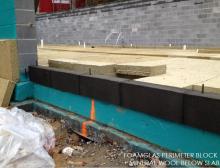
Three experienced practitioners will demonstrate that we needn’t (shouldn’t?) be captive to foam in the high performance building industry by showing practical solutions that eliminate foam in new and retrofit applications – above and below grade.  Using real projects and assemblies, the speakers will discuss an integrated design build process, review the implementation of details and sequencing and the verification and commissioning of alternative construction methods.  Without dwelling on the negative environmental impacts of foam insulations, alternative, safer insulation mater

Integrated Design for High Performance Schools
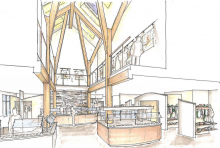
Schools provide complex puzzles for the architects and engineers who engage them. In this panel discussion, two high performance firms and their construction and engineering partners will discuss the challenges and rewards of decision-making in an educational environment, and the value of a fully integrated design process. At the Proctor Academy, the new dining hall’s energy target was Net Zero. The complex load profile – especially the all-electric kitchen and its extensive make-up air requirements, presented the design team with a hefty challenge. At the Friends School of Portland, architect and builder engaged with the school’s building committee to create a building to embrace the community’s values of Simplicity, Integrity and Stewardship, and managed to deliver Maine’s first Passive House school building.

Hacking LEED: v4 Innovation and Performance

How will green building practitioners use the updated and mandated LEED v4 to raise the bar on energy & environmental performance in buildings? At the end of October 2016, the current LEED 2009 system will no longer accept new projects and all projects will be registering in v4. Will you be ready? What point and point complexes will help you through the new maze? How do pilot credits and innovation credits fit? Are you watching how legacy projects registered in v2009 are subject to changing requirements even now? Yes​!​ you have heard all about how LEED v4 is coming.

Getting to Zero: Frameworks & Roadmap to help you achieve portfolio-wide performance improvements

The future of our planet and our profession depend on our ability to co-create collaboratively and achieve levels of synergy that transform our impact. Net Zero, the 2030 Challenge and LEED define performance targets. Yet, critical gaps remain between rising performance goals and the organizational capability to consistently achieve them. AIA 2030 data shows that 57% of gsf uses energy modeling, meaning 43% doesn’t. Most teams don’t know what the anticipated energy use is. Firms also report that LEED certified projects, which tend to have more commitment and higher levels of integration, have 24% lower pEUI than non-LEED projects, yet LEED still represents a small percentage of a firm’s portfolio. This session provides participants with frameworks and proven methodologies to transform their practice from “random acts of sustainability” to consistent capability based on cultural change, clearly articulated methodologies, truly integrative design and effective use of metrics to achieve continuous improvement.

Affordable Passive House Commercial Buildings - Secrets Revealed

High performance commercial buildings cost 10- 25% more to build than conventional buildings, right? Adam Cohen of Passiv Science has been designing and building high performance commercial buildings at costs comparable to typical new construction and achieving Passive House level results. This workshop will explain the basics of Passive House design principles specific to commercial buildings. It will then go into the details of how buildings like dental clinics and college dormitories can be built at market rate while achieving Passive House standards. Integrated Project Management will be discussed as will details, equipment, controls and areas for capturing money typically left on the table in conventional design-bid-build project delivery situations.

Diagnosing and Air Sealing Large Commercial and Institutional Buildings

If you want your large commercial or institutional project to meet your savings number, exceed energy performance goals, or get your label, you need to perform targeted air leakage diagnostics and actually fix the leaks. There are numerous other reasons to retrofit a buildings envelope including comfort, humidity control, infestations, component degradation or simply being able to control a building. One of the nation’s leading experts in this field will walk you through the hundreds of miles and millions of square feet of buildings that he has diagnosed and fixed over the last few years, and show you real results from real buildings. This day-long seminar will also provide the opportunity to discuss practical solutions to the problems encountered.

Building Science Puzzles

No matter how long you’ve been a building practitioner, you never stop encountering building science head-scratchers. Assemblies that you thought you had meticulously detailed may leak. Materials that you thought would last decades may show signs of pre-mature failure. Systems that seem like they should work (or have worked in the past) don’t. This workshop will teach you how to identify, diagnose and solve building science puzzles for a variety of building types, including residential, commercial and institutional, constructed using both traditional and modern methods. The presenters will share a series of case studies and invite the group to work together to identify the problems and propose solutions. Participants will also have an opportunity to present their own puzzles for group discussion.

Getting to Zero: User Engagement in Achieving Net Zero Energy Buildings
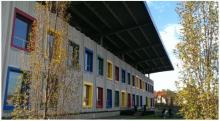
As the A&E industry continues to focus on improving the energy performance of buildings, it’s clear that some energy saving measures are outside the designer’s control. Occupants play a significant role when it comes to the energy used. We engage users to discuss space needs, environmental and aesthetic desires, yet we often do not discuss users’ roles in energy use. Designers must recognize the role occupants have on energy use and adjust our design process accordingly. Join us for an exploration of how design teams can bring occupants into the conversation about energy, equipment and building usage to help improve energy efficiency and help net zero energy projects meet energy use targets. This session will discuss how user engagement was incorporated in the design process on case study projects including the net-zero energy capable school for the NYC School district and the proposed net-zero energy King Open and Cambridge Street Upper schools in Cambridge, MA.

Instructions NOT Included: Lessons Learned Operating Zero Net Energy

In May of 2011, TD Bank opened the first zero net energy bank in the United States. The LEED Platinum certified store, which is located in Ft Lauderdale, FL, achieved net zero operations in 2012, but missed it in the last month of 2013 by just 1,845 kWh. Net zero operations were again achieved in 2014 due to the project team and an aggressive monitoring process put in place to ensure net zero status would NEVER be missed again. In this session, we are ready to share the good along with the less than good... Can a coffee maker really cause you to miss your energy consumption target? We will answer that with REAL DATA from our measurement and verification reports and we will also show how TD and CBRE, the facility management partner, used the M&V information to drive operations. We will share what we learned at the outset of the project about the design and construction process, the issues that prevented us from achieving net zero operations in year two, and most importantly how we resolved the problems to ensure success in year three and beyond. Participants will leave this session with specific actions they can implement immediately to improve energy performance, as well as team dynamics. This presentation is NOT just for net zero projects but for ANY PROJECT that seeks to reduce energy consumption and have a highly functional facility management partnership.

Airtightness Testing in Large Buildings
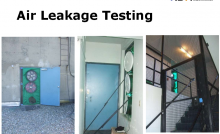
Airtightness testing has long—since the 1980’s—been used to test high-performance housing. The 2012 version of the International Residential Code requires testing of every new home. Recently there has been a growing trend of testing the airtightness of large buildings as well. This session reviews why one would invest in airtightness testing for a large building, how the testing is done, how the results are interpreted, and how this information can be used.

Passiv for the Masses

Climate change has made mainstream adoption of high-performance buildings a priority, and the Passivhaus standard provides a means to assess and drive the performance of these buildings. With 16 certified Passivhaus buildings between them, industry leaders Adam Cohen, Alan Gibson and Mathew Omalia will discuss their experiences designing and constructing a wide spectrum of building types, styles and scales that meet the Passivhaus standard. Adam Cohen will discuss techniques used to design, manufacture and construct Passivhaus buildings that cost the same or less than comparable code buildings. Alan Gibson will talk about simplifying construction systems and assemblies, and lessons learned about structure, moisture, air sealing, and air quality. Matt Omalia will explore how to integrate Passivhaus parameters into the design process to create a new canon of architectural design. The presenters will use case studies including: single and multi-family homes, schools, university residence halls, and community buildings.

The Challenges of Net Zero Energy When It's Bigger than a Breadbox
Municipalities and other owners of large buildings are increasingly setting their sites on net-zero. This session will feature a case study of the 190,000sf Martin Luther King, Jr. School, the first of the Cambridge public schools to target NZE. Presenters will discuss the process, content and tools used at design workshops and user group meetings to gather, analyze, ideate and integrate information into design solutions while also facilitating cultural and behavioral change among users. They will highlight the challenges and gritty details involved in shepherding both this project and others—including issues related to codes, day-lighting, systems selection, load management, maintenance, and product selection. Attendees will learn what worked, what didn’t, and why.

Room-side Low-e Coating: As Good as It Sounds?
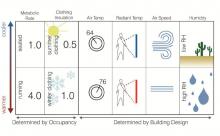
The selection of a glazing type for a project is based on factors like thermal performance, impact on occupant thermal comfort and cost. Double pane glazing units with a room-side low-e coating are becoming popular, because their thermal properties and visual appearance are comparable to those of a triple pane unit, but at a lower cost. However, the impact of selecting one over the other can have significant impact on seasonal thermal comfort conditions, and the wrong choice could lead to a need for perimeter heating as a remedial measure. This session addresses the benefits and drawbacks of using double pane glass with a room-side low emissivity coating as a substitute to a more expensive and heavier triple pane unit. In order to ensure no perimeter heating is necessary with either unit, we introduce a method to quantify two factors affecting occupant thermal comfort: radiant temperatures and risk of downdraft.

Aiming at Zero: The Struggle to Get There
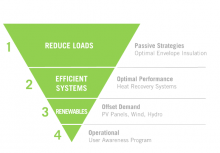
Everyone is talking about getting to zero energy by 2030. It’s easy to say, but very hard to do. What is the process and how do we ratchet down our EUI on each project? How can goal setting and Client priorities influence energy use and building performance? Can we actually get to zero? This lively moderated panel discussion will include the Architect, Engineer, and Owner/ Client on Weygand Hall at Bridgewater State University (completed in 2013) and on Keene State College (currently under construction). We will address the planning, design, and results of both projects as well as the ZNEB pilot study completed simultaneously with Weygand Hall. We will show best practices and lessons learned from each experience. We will focus on the continuum of these projects over time, how each process and learning experience influenced the next, and how this iterative approach leads to better energy performance and keeps us on track for 2030.

The True Performance of Your Hidden HVAC Equipment
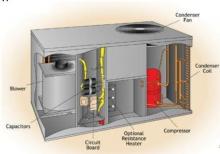
How well does central ventilation equipment actually perform? VEIC and CLEAResult have respectively conducted field monitoring of Roof Top Units in commercial/institutional buildings and central Energy Recovery Ventilators in multifamily buildings. The outcomes? Although in certain cases not as bad as one would predict, this equipment is often underperforming, neglected, misunderstood, and installed and/or operated incorrectly. Come and learn more about our findings, how to improve current performance, and alternative design ideas to do it differently next time.

Break It or Lose It: Thermal Bridging in Building Envelopes
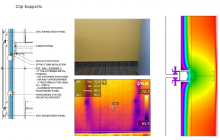
While thermal bridging is widely acknowledged to exist in modern commercial building envelopes, little is known on the significance of its impact. Utilizing infrared images taken from targeted assemblies at 15 recently completed buildings; we have seen a range up to 70% less than the design intended R-value. This range shows the unintended impact that design details can have on thermal performance. We identified 16 common areas of thermal bridging that were frequently observed in the buildings surveyed. Broken into two broad categories of façade systems and transitions / penetrations, they range from curtain wall systems, to existing wall renovations, to conditions such as parapets and transitions to foundation. The outcome of this research is a better understanding of thermal performance of commercial façades in order to help architects and building professionals understand the real impact of common thermal bridges and present alternatives to the industry standards that enhance performance.

Air Leakage: What You See is Not What You Get
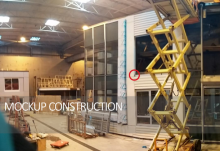
Air leakage is an important consideration in all construction. Tighter buildings are more energy efficient and comfortable. Although large buildings are rarely blower door tested, architects, enclosure consultants, manufacturers, and installers spend time and money to provide air tight buildings. Details within the contract documents and subsequent shop drawings indicate the intended location of the air barrier. However, over the course of mockup construction, mockup testing, and project construction, air leakage issues often arise that were not addressed prior, generally at unusual conditions and transitions. These locations can be difficult to detail and are typically overlooked. This presentation will first review the basics of air leakage detailing, and then provide specific examples where project documentation did not address air leakage sites, which were found in the field. Implemented field fixes will also be presented. Although project-specific, these case studies will demonstrate typical locations that must be carefully vetted during detailing.

Making Money by Saving Energy

Do all major capital improvements result in better buildings with lower operating costs, better energy management strategies and improved data collection? This panel will discuss the changes made throughout their portfolios to improve NOI, reduce maintenance costs and improve operations, and present the challenges associated with planning for new technologies and staff training so savings can be realized.