Multifamily

Real World Data of Domestic Hot Water Consumption and Energy

What are the real-world loads and efficiencies of domestic hot water (DHW) systems in multifamily buildings? New Ecology, Inc. has tested many DHW systems using data loggers and Btu meters, and used these data to inform the design of new and upgraded DHW systems. Testing has determined tenant usage patterns, system efficiencies and issues with controls and system components.

Installing Energy Smarts for Your Multifamily Project: Providing Holistic Behavioral Energy Management

Your building is only as efficient as the operators and inhabitants. Even the most sophisticated and efficient building systems can be undermined by poor training and behavioral biases. New knowledge about these biases has led to proven, people-centered strategies with high savings to investment ratios.

Retrofitting Residential Properties

One-to-four unit homes present special challenges to energy-efficiency upgrades. Many of these homes were built from 1890—1960 and lack insulation, leak air, and waste energy and water. This panel will share data and solutions to improve the energy- and water- efficiency of these homes, discuss cost-benefit analyses of planned improvements, describe options for testing results of completed upgrades, and explore how to pay for this work.

Spending Through the Roof: Tall Building Energy Wasted Through Passive Vents

Recent research revealed that an estimated $11M in energy cost is wasted annually due to open vents at the tops of tall buildings. The vents are code-mandated but are left open, allowing tall buildings to become chimneys in winter. A NYSERDA study report published by Urban Green Council quantified the energy impact and recommended retrofits to halt the airflow escaping from elevator and stairwell shaft vents.

Permanently Passive: Building With AAC

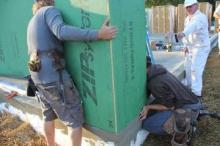
Autoclaved Aerated Concrete (AAC) is a masonry product with a long history in much of the industrialized world, yet it has seen relatively limited use in the United States. The two presenters, Dan Levy and Steve Bluestone, both find AAC preferable to wood as a building material for many reasons, including resistance to fire, water, mold pests, and structural loads. And AAC does all of the above with a single material installed by a single trade.

Biomass Design and Potential

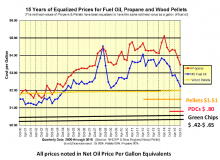
 This course touches on some of the considerations one should make when designing and planing an automated biomass heating system.​ It will cover fuel choice and logistical advantages, equipment availability and pros and cons of different choices,  sizing for financial viability, and emissions implications of fuels, moisture content and combustion equipment. We will also take a quick look into the near future and discuss a few up-and-coming cogeneration options.


Living Building Challenge: Historic Building, Modern Lessons

The Living Building Challenge (LBC) can be applied to any building project, including historic renovation and new construction. Charley Stevenson and John Rahill will compare and contrast the LBC renovation of an 18th century plank building to the design and construction of several new LBC buildings.  By examining the three most challenging petals (water, energy and materials) they will illuminate the benefits of and the obstacles to LBC compliance.

Foam-Free - Fabulous, Feasible, and Fun!
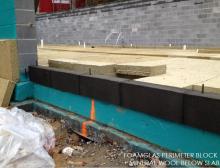
Three experienced practitioners will demonstrate that we needn’t (shouldn’t?) be captive to foam in the high performance building industry by showing practical solutions that eliminate foam in new and retrofit applications – above and below grade.  Using real projects and assemblies, the speakers will discuss an integrated design build process, review the implementation of details and sequencing and the verification and commissioning of alternative construction methods.  Without dwelling on the negative environmental impacts of foam insulations, alternative, safer insulation mater

Navigating Product Selection: How to Find the Greenest Materials in the Age of Full Disclosure

Are you drowning in the arcane alphabet soup of product labels? Frustrated with inflated environmental claims from manufacturers? Unsure of the health and safety risks associated with your favorite building materials? Help is on the way! Join the experts from BuildingGreen, who have been researching and writing about green building products for 25 years. In this hands-on half-day workshop, you will learn how to cut through the b.s. and select safer, greener products, and you’ll get an in-depth understanding of the trove of information you can find in product disclosure tools like environmental product declarations, health product declarations, and the newly required safety data sheets. Understand the full context, get down and dirty with the devil in the details, and learn which information you can safely ignore. You’ll also glimpse some of the newest, most innovative products that are paving the way for a greener future, and you will leave with powerful educational materials to share with clients and other team members. Bring your questions, share your insights, and get ready for an enlightening and entertaining morning!

Getting to Zero: Frameworks & Roadmap to help you achieve portfolio-wide performance improvements

The future of our planet and our profession depend on our ability to co-create collaboratively and achieve levels of synergy that transform our impact. Net Zero, the 2030 Challenge and LEED define performance targets. Yet, critical gaps remain between rising performance goals and the organizational capability to consistently achieve them. AIA 2030 data shows that 57% of gsf uses energy modeling, meaning 43% doesn’t. Most teams don’t know what the anticipated energy use is. Firms also report that LEED certified projects, which tend to have more commitment and higher levels of integration, have 24% lower pEUI than non-LEED projects, yet LEED still represents a small percentage of a firm’s portfolio. This session provides participants with frameworks and proven methodologies to transform their practice from “random acts of sustainability” to consistent capability based on cultural change, clearly articulated methodologies, truly integrative design and effective use of metrics to achieve continuous improvement.

Huddle Together for Warmth: Multiple Solutions for Multifamily Passive House
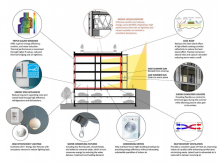
We will show two mid-rise multi-family projects in the northeast that meet either the Passive House or PHIUS+ building energy standard. The Distillery’s 28-unit Phase 1 building in South Boston, MA and the Bayside Anchor 45-unit project in Portland, ME, both now under construction, will be used to discuss the design and construction principles that are employed to radically reduce energy consumption and construct beautiful, low energy, and healthy urban living spaces. Details, testing data and lessons learned will be shared with a special focus on large scale air barrier implementation, efficient ventilation systems, and cost savings and funding metrics.

O&M Stories in MF Housing: Challenges, Solutions & Results

In the world of multi-family housing every operational dollar is earmarked, budgeted, and designated. For both Selfhelp Community Services, owning/operating 960 units, and POAH, owning/operating 8500 units, this rings especially true. Both organizations have worked to create operational plans and protocol, short and long term goals to reduce energy spending, and have thought creatively about how to manage, track, and create change within their organizations. With technical assistance to support both organizations and build capacity, they have telling results, some failed experiments, and also successful solutions that are working well to save energy and reduce costs. In this session you will hear how both organizations tackled similar hardships, how they reduced energy and water spend with little upfront capital. Both organizations learned how to use data to monitor and understand consumption, and expanded their capacity for energy and water management through systems, trainings and drawing on technical experts where needed.

Passive House Deep Energy Retrofits: Revitalizing Masonry Multifamily and Single Family Wood Frame Buildings
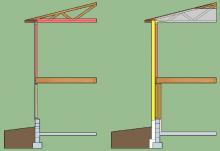
Michael Hindle and Matt Fine led a Passive House retrofit of three abandoned masonry apartment buildings on the Southeast side of Washington DC for low-income families. Designed to PHIUS+ standards, the renovation goal coupled with on-site renewables, and affordable housing tax credits, minimizes expenses for occupants - providing stability for resident families, while achieving nearly zero energy performance. The team designed and executed and external insulation strategy of I-joists and dense-pack fiberglass, with integrated window shading and airtightness. See the details, the processes and lessons learned. Chris West bought a raised ranch house in Jericho, Vermont. Built in 1976 the house has standard 2x4 construction (16 oc) filled with fiberglass, single pane windows, and tuck under garage. In 2010 Chris took the Passive House training. Stuck with some earlier bad choices, and issues typical to every retrofit, see how he implemented Passive House methodology and calculations, to reduce the heating load of the house by 75%.

Building Science Puzzles

No matter how long you’ve been a building practitioner, you never stop encountering building science head-scratchers. Assemblies that you thought you had meticulously detailed may leak. Materials that you thought would last decades may show signs of pre-mature failure. Systems that seem like they should work (or have worked in the past) don’t. This workshop will teach you how to identify, diagnose and solve building science puzzles for a variety of building types, including residential, commercial and institutional, constructed using both traditional and modern methods. The presenters will share a series of case studies and invite the group to work together to identify the problems and propose solutions. Participants will also have an opportunity to present their own puzzles for group discussion.

The Elephant in the Room: How to Affordably Increase the Energy Efficiency of Our Existing Housing Stock
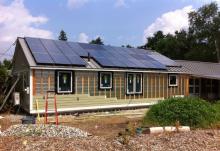
The biggest hurdle for energy efficiency in the built environment today is how to improve the energy efficiency of our existing housing stock in an affordable manner. These three practitioners bring several years of experience to the fore. They have seen what works, what doesn't, and why. The session will review the best building practices of how to view, evaluate and perform an energy upgrade to a property. Average square foot costs on energy efficiency return will be discussed and what can be the expected energy reductions from certain projects. This session will focus on some of the easier energy-efficiency upgrades to be taken now and what to put off to employ our next generation. Evaluation of the existing available financial resources to be used for offsetting the owner costs and how they might be improved. Lastly, they will address when a project is beyond the scope of affordability and what telltale signs to look for.

Roofs: Research and Reality

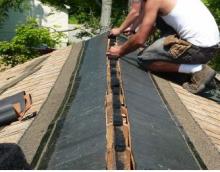
To vent or not to vent? To insulate outboard or inboard? To provide details or just let contractors wing it? These are some of the questions two pros, who spend a good portion of their work days crawling around on roofs (of both wood framed and masonry buildings), will address. They will share case studies of roof failures; go over edge and penetration details that are so critical for long-term durability; discuss how to take advantage of opportunities to improve thermal performance; and share some of the latest geeky research, including how to do an unvented assembly without code-mandated spray foam. You’ll leave this session knowing what works, what doesn't, and how to juggle budgetary, design or building constraints to build durable, low-risk roofs.

Passiv for the Masses

Climate change has made mainstream adoption of high-performance buildings a priority, and the Passivhaus standard provides a means to assess and drive the performance of these buildings. With 16 certified Passivhaus buildings between them, industry leaders Adam Cohen, Alan Gibson and Mathew Omalia will discuss their experiences designing and constructing a wide spectrum of building types, styles and scales that meet the Passivhaus standard. Adam Cohen will discuss techniques used to design, manufacture and construct Passivhaus buildings that cost the same or less than comparable code buildings. Alan Gibson will talk about simplifying construction systems and assemblies, and lessons learned about structure, moisture, air sealing, and air quality. Matt Omalia will explore how to integrate Passivhaus parameters into the design process to create a new canon of architectural design. The presenters will use case studies including: single and multi-family homes, schools, university residence halls, and community buildings.

Home Performance Insights from Big Data at NEST

Connected devices like the Nest Learning Thermostat provide an unprecedented amount of data about home energy usage patterns. This data can be used to further our understanding of how homes really work, and to help us identify both opportunities for and barriers to improving home performance. This session will present insights gleaned from analyzing large-scale anonymized data collected by Nest thermostats, and discuss the significance of these insights for the home performance industry. Topics to be addressed include: variations in HVAC run times with weather, real-world sizing of heating and cooling equipment, indoor temperature and humidity variations by season, and heat pump performance characteristics.

The True Performance of Your Hidden HVAC Equipment
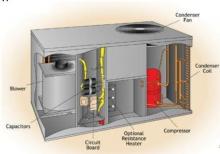
How well does central ventilation equipment actually perform? VEIC and CLEAResult have respectively conducted field monitoring of Roof Top Units in commercial/institutional buildings and central Energy Recovery Ventilators in multifamily buildings. The outcomes? Although in certain cases not as bad as one would predict, this equipment is often underperforming, neglected, misunderstood, and installed and/or operated incorrectly. Come and learn more about our findings, how to improve current performance, and alternative design ideas to do it differently next time.

Passive House: Affordable, Retrofit, and Huge

Probably the most adopted newer certification in the building industry, Passive House is a US and international standard that small to very large owners are using to build and retrofit. Simple, affordable, and durable, this standard works in many types of buildings. Learn from four experienced practitioners about how smaller buildings are retrofitted, how affordable housing is built within budget, and how large scale dormitories and other buildings will be built in the future.

Benefits of Cx and RCx: Compliant Buildings, Healthy People

This discussion will examine multifamily and commercial commissioning and retro-commissioning projects with an emphasis on: code compliance; increasing energy savings; preventing building system failures; resolving operations and maintenance issues; and improving indoor environmental quality (IAQ). The session presentations will describe some of the most common aspects of buildings, such as ventilation, to lesser-known measures, like user tools and resources available in the marketplace to start commissioning buildings for compliance, efficiency, and health.

Airsealing and Firestopping: Smart Science

Air leaks cause comfort, energy, fire, durability, and vermin problems throughout buildings. Recent studies have shown that: stack effect losses in high rise buildings leak large amounts of treated air (who knew?); airsealing as part of new construction helps meet performance standards and increase comfort; and airsealing individual apartments as part of retrofit projects saves occupants money and increases comfort in those units. Listen to three diverse presentations on methods and results in airsealing projects.