Beyond Energy*

Integrative Carbon Building: Embodied Carbon, Net Positive Carbon, and the New Carbon Architecture

Our current framework for net-zero buildings doesn’t account for embodied carbon – that is, carbon pollution created during material manufacturing and distribution. In this session, we will show how systems thinking about carbon and an integrated design approach can change building practices from a problem to a solution. We will present data on the embodied carbon impact of green buildings; address how to quantify embodied carbon in design/build practices; and discuss present-day carbon-positive construction materials and assemblies, which can reduce the carbon load in the atmosphere. This effectively uses buildings as carbon-sequestering reservoirs, which can mitigate and even reverse climate change effects. Understanding the carbon cycle, and how we as design/build practitioners can make beneficial choices, is the next horizon for integrative green building.

The Future City: An Integrated Ecosystem

The city is an important scale for holistic innovation that can play a major role in global decarbonization. Practitioners can learn to optimize this scale to integrate building-level, streetscape-level, and community-level clean energy ingenuity. Audience members will interact with: a community psychologist who has used a whole systems approach to shape our culture and places for decades; a regional practitioner who helps to usher in smart-city innovation; and a state agency that is working to foster community public-private microgrids. Each participant will leave with 3 action steps to implement a city-scale measure in their ecosystem.

Smart Parking Design as a Climate Tool

Parking creates numerous environmental impacts, including excess energy consumption, urban heat island effect, stormwater runoff, traffic congestion, and pollution. This presentation will illustrate how well-designed and efficient parking structures can dramatically improve a property's carbon footprint by minimizing natural resource use and incorporating green design. Best-in-class parking sustainability standards, including the USGBC's Parksmart Certification, benefit neighborhoods and communities, while maximizing the bottom line. Topics covered will include low-carbon strategies, electric mobility, stormwater management, and green infrastructure.

Help! I'm Drowning

This session will provide a unique opportunity for sea-level rise to be discussed at three various scales by experts approaching this timely issue in different ways. Shaun O’Rourke, Chief Resiliency Officer for the State of Rhode Island will discuss his on-going efforts at the state level by focusing on sea-level rise, urban heat and flooding. Barnaby Evans, founding-artist of internationally acclaimed WaterFire, will share his work at the city level by touting sea-level rise mitigation as an economic development tool. Stephanie Zurek, of Union Studio Architects will highlight on-going work at the neighborhood level by sharing the impact of sea-level rise on historic Newport, RI from previously published “Keeping History Above Water.”

Resiliency: Energy When You Need It

The floods and hurricanes of 2017 and the winter weather of 2018 all highlight the need for buildings and communities that can withstand natural (and human-made) disasters and continue to provide critical energy needs. The speakers will discuss (1) resiliency in general, (2) how building design professionals can incorporate resiliency into their projects, and (3) examples of communities that are starting to incorporate resiliency into critical infrastructure (microgrids).

Air (vital stuff): Strategies for Getting It Into (and out of) Multifamily Buildings

In an increasing market for multifamily, energy-efficient and high-performance building shells, efficient ventilation strategies become paramount in maintaining health and comfort without sacrificing high level project goals such as Passivhaus Certification. So what is the best approach to creating a well-ventilated multifamily building? As with most issues in design, it depends…. This session will discuss ventilation approaches to be considered from large central air handlers, to individual systems in each dwelling, to options in between.

Materials Transparency: Choosing Better Products for Your High-Performing Building

High performance buildings products create sustainable buildings but often contain materials that also create adverse effects, such as natural resource depletion, pollution, and exposure to harmful chemicals. As a result, transparency is becoming a primary objective of ambitious teams who want both high efficiency and healthy buildings.

Embodied Energy and Carbon: Calculating the Life Cycle Impacts of Buildings

It is becoming increasingly apparent that the impacts of buildings extend far beyond operational energy and carbon. As the thermal standards of buildings improve, attention will shift toward wider life cycle impacts including material production, transport, construction waste, on-site activities, material replacement, maintenance and finally the end of life of the building. These life cycle stages have a considerable impact, yet they are often neglected.

Plenary, Part I - Beyond Energy: The Concealed Environmental Impact of Buildings and Residents

When it comes to environmental impacts of buildings, operational energy (and to some degree, carbon) attracts the most attention. This is likely because buildings currently account for one third of the world’s energy use, and this figure is projected to double by 2050 – presenting both a huge challenge and a great opportunity to improve the sustainability of the built environment.

Net Zero Water: Not a Dry Topic

Construction often negatively impacts the natural balance of water cycles. Even regions with historically abundant quantities of potable water are depleting aquifers, while record rainfall provides destructive amounts of storm water. The Living Building Challenge developed the “Net Zero Water” requirement as a response to the growing water crisis.

WELL, LEEDv4, and the Quest for Material Health

This session offers a three-part consideration of healthy materials. Part 1 investigates why built environment professionals should and do care about this growing topic of concern, and explores the history of chemicals of concern, their prevalence within the built environment, and what we have done to date to combat their unintended consequences. Part 2 explores the overlap between LEEDv4, the Living Building Challenge, and the new WELL Building Standard, particularly in regard to indoor air quality and materials procurement.

New IAQ Metrics to Avoid Being Stupid, Sick, and Tired

Our poorly ventilated homes and buildings are making us stupid, sick, and tired—at a cost that is staggering. Improvement of today’s ventilation standards can increase human productivity with a value that is more than 100 times the associated cost of increased ventilation. Thus, a new home-design paradigm that places human health, well-being, and productivity is desperately needed. This session examines the impact of IAQ on our health and productivity, and defines a new set of IAQ metrics.

Materials Transparency: Choosing Better Products for Your High Performing Building

High performance buildings products improve energy efficiency to create more sustainable buildings. However, the materials used to make these products can also create adverse effects, such as depleting natural resources, causing pollution, and exposing us to harmful chemicals. In recognition of these realities, product ingredient transparency is becoming a primary objective of ambitious project teams who want both high efficiency (even net positive) and healthy buildings.

Building Local, Buying Local: Advantages and Challenges of Sourcing Materials from New England Forests

New England’s 33 million acres of forest present an opportunity to reduce the embodied energy of building materials through shorter shipping distances and have the added benefit of directly supporting the socio-economic sustainability of local communities. See the design advantages and challenges of sourcing local forest products via a case study of structures including the DCR Walden Pond Visitor Center, the Hitchcock Center, and the UMass Integrated Design Building.

Data-Driven Design and the Living Building Challenge

Super-insulated construction, simple yet efficient building systems, and modern solar generation have made net zero energy a realistic project goal for new construction even in cold climates. However, achieving this without the use of red-list materials is a serious balancing act. Moisture control, air tightness, and thermal isolation are critical; evolving envelope products must be tested.

NESEA Emerging Professionals Career Forum

It's back by popular demand! NESEA's Career Forum is a free resource extended to emerging professionals, graduate and undergraduate students pursuing a career in the high performance building and renewable energy sectors. During this forum, participants will gain insights into the sustainable building sector and strategies for obtaining related positions.  Topics for discussion will include types of careers available, strategies for gaining experience, identifying opportunities, job seeking and networking.

Does Electric Grid 2.0 Mean Energy Democracy?
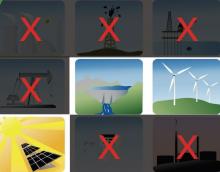
The U.S. energy system is undergoing a remarkable transformation to decentralized and renewable power. Transportation and heating are becoming electrified. Clean, renewable power is growing at an exponential rate and competing on cost with fossil fuel energy sources. Smartphones and automated controls allow an unprecedented decentralization of control. This session explores how the 21st century electric grid can give individual consumers power over their power, but only if the rules are written right.

Material Selections: A Life Cycle Perspective Viewed Through One Home
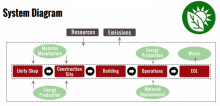
Sometimes the things we think are a poor environmental choice turn out to be not so bad. Sometimes they are worse. Ben Morelli, along with Bensonwood energy & sustainability experts – Rheanon DeMond and Danny Veerkamp - will discuss the results of an LCA of a single family home; from material source through building lifespan. Life cycle assessment (LCA) is one of many emerging tools available to building designers and construction firms to measure and guide reduction of their structures’ environmental impact. The presenters feel it is essential to look at a broad variety of impact categories –not just climate and energy considerations - in order to assess the trade-offs that may be associated with the emerging paradigm of advanced, green buildings. The results of this analysis confirm the importance of systemic energy reduction strategies, while challenging some of our preconceived assumptions on the relative impacts of various materials.

The Future of Net Zero Energy

Net Zero Energy Buildings have reaching a tipping point. The economic limitations that restricted their success in the past have changed drastically and the technologies needed to achieve Net Zero Energy are now readily available. This session will uncover the strategies and technologies used and the policies and programs in place that are accelerating the uptake of Net Zero Energy Buildings and Communities. This session will also highlight inspiring case studies including project teams’ motivation for pursuing Net Zero Energy Building Certification, how they achieved it and how they maintain performance over time. Brad Liljequist, Technical Director of the Net Zero Energy Program of the Living Building Challenge, will uncover the trends emerging in Net Zero Energy and discuss how each participant can take the lessons learned into their own practice.