Beyond Energy*

Drivers, Trends, and Tools for Healthier Materials Selection

This session will educate participants on drivers, tools, and trends for healthier materials selection. As LEED v4 and the Living Building Challenge's Materials Petal become mainstream, designers are starting to focus on material's environmental and human health impacts. In the past, "green" materials were simply defined by physical attributes: the amount of recycled and regional content, allowable VOC's, etc. Because we are now tasked with demonstrating optimization across the entire supply chain, tools and practices which facilitate "transparency" and maximize designers' decision making capabilities are emerging. This presentation will introduce the following: Red Lists, Environmental Product Declarations (EPD's), Health Product Declarations (HPD's), and extended producer responsibility. Our panel experts include a manufacturer which is promoting these tools and finding many benefits through their supply chain optimization, as well as local practitioners who are developing the tools and guiding their implementation.

Achieving Zero Net Energy Affordably Today: Mobile Home Replacement
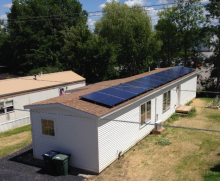
A modular home factory in Wilder, VT has opened to build zero-net energy mobile home replacement units. While there have been other efforts to replace mobile homes outside Vermont, they have done so with newer manufactured housing units that suffer from poor indoor air quality, high energy costs, and durability issues. This session will provide an overview of the issues with manufactured and mobile homes including financing and depreciation, attributes of the zero-net energy replacement modular home, the design and build process, and the comprehensive whole-house monitoring system. Detailed monitored energy and environmental data will be shared from two years of occupancy. The session will also discuss design challenges/constraints associated with cost, prefabrication, and transportation of a Modular/mobile home. We will present a comparative look at cost and energy with other related housing initiatives, as well as show the cost to benefit analysis of what it would take to bring the project to the Passive House level.

Offsite Construction: the Future?

A panel of Architects and Manufacturers steeped in the offsite construction industry will discuss the future of offsite construction. Topics include the stigma of the industry itself in the US versus widespread successes overseas, challenges of the process within our current system, the truth behind perceived cost/speed/quality advantages, and the frank and current reality of it all.

Navigating Product Selection: How to Find the Greenest Materials in the Age of Full Disclosure

Are you drowning in the arcane alphabet soup of product labels? Frustrated with inflated environmental claims from manufacturers? Unsure of the health and safety risks associated with your favorite building materials? Help is on the way! Join the experts from BuildingGreen, who have been researching and writing about green building products for 25 years. In this hands-on half-day workshop, you will learn how to cut through the b.s. and select safer, greener products, and you’ll get an in-depth understanding of the trove of information you can find in product disclosure tools like environmental product declarations, health product declarations, and the newly required safety data sheets. Understand the full context, get down and dirty with the devil in the details, and learn which information you can safely ignore. You’ll also glimpse some of the newest, most innovative products that are paving the way for a greener future, and you will leave with powerful educational materials to share with clients and other team members. Bring your questions, share your insights, and get ready for an enlightening and entertaining morning!

Whole Property Retrofit: Redesigning Suburbia for an Uncertain Energy & Food Future
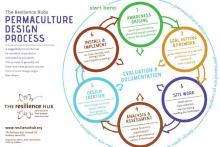
How do we turn the "problem" of suburbia into an enormous opportunity to create a set of resilient systems that can adapt to a changing world? Learn how a holistic design process and a whole-property retrofit in Maine has created a suburban model of living that requires significantly less time, money and energy to run while simultaneously enhancing the thermal comfort and well-being of the residents. This case study presents a transferable suite of findings on efficiency, renewables, integrated landscape elements, food production, transportation and “incremental deep energy retrofitting” which have weaned this eighty-year-old home completely off of fossil fuels.

Calculating the Life Cycle (Cradle to Grave) Impacts of Buildings

It is a tall order for humanity to become healers of the planet. In order to do so, people need to tap into new avenues of influence that are not yet sufficiently explored and identified. It is essential to lessen the environmental impacts of buildings in ways extending far beyond operational energy and carbon by considering a holistic view of material and energetic flows across a building’s full life cycle.At the same time we must consider how to give back to the planet and create a regenerative future. This workshop will demystify the important practice of life cycle assessment (LCA) and inspire with an overview of handprinting,which identifies how we not only do less harm, but change things for the better. Participants will gain the skills needed to calculate the life cycle impacts of buildingsacross their full lifecycle – material production, transport and construction, material replacement and maintenance; and finally material disposal or re-cycling, and to use the results during the design process to evaluate design options and identify low-impact solutions. In the afternoon, participants will learn about the current state of the science of LCA practice, how to interpret and compare LCA results, and the integration of LCA into certification schemes, such as LEED and the Living Building Challenge. Presenters will share case studies in which LCA informed design decisions on built projects and participants will generate a series of comparative LCAs using Tally, a Revit-integrated LCA tool. Participants are encouraged to bring examples of material, assembly, or whole-building LCAs and their thoughts and questions about this emerging practice.

Reimagining Human Waste as an Opportunity: Water Savings and Urine Reclamation
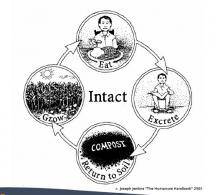
Leaders of one of the world’s largest toilet manufacturers and a visionary nonprofit will share stories from the leading edge of current water conservation technologies, and a future of entirely new approaches to managing human waste. Come hear about and engage with the latest science on the life-cycle impacts of toilet manufacture and use, and on cost-effective ways to reclaim nutrients from the waste stream. This is an opportunity not to be missed!

A How-to Guide to Carbon-Neutral Cities

At NESEA we know how to make really good buildings. But we can only solve so many problems with better buildings. We need to start working just as collaboratively and thoughtfully on making better cities and regions. In this full-day workshop, you’ll have an opportunity to engage with real-world practitioners from three different countries whose home cities have established quantifiable plans for achieving carbon-neutrality within our lifetimes. The goal of this workshop is to provide participants with the framework and tools to go back to their own communities and do the same. We’ll look at support provided by national, regional, and local governments; the role of carrots and sticks; ways to engage the private sector; and the import of public perception, opposition, and support. Participants will have a chance to review the plans each municipality has developed and challenge the planners with the hard questions about dream versus reality.

Combating Climate Change with Timber Construction
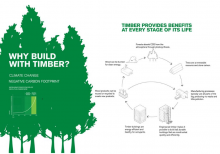
With its smaller carbon footprint, timber construction should be considered alongside steel and concrete to build both low and mid-rise projects. This session will introduce innovations in timber technology, and through case studies demonstrate the wide range of benefits including environmental benefits. With buildings in the U. S. accounting for 38% of all carbon emissions and with population growth on the rise, we must reconsider how we construct our buildings. Climate change can be combatted in two ways –by reducing carbon emissions and by removing carbon from the atmosphere – and timber is unique in that it is the only building material that can do both. Recent innovations in timber technology is paving the way for timber once again to become integral to the fabric of cities, at this pivotal moment in time.

Core Principles: Sustainability in Your Practice

The terms “sustainability” and “resilience” drive us to address a bigger, long term picture while managing the details at hand. The skills needed to accomplish this feat of ever-changing perspective are applicable to project work as well as to your own career development. The complex puzzle includes budget, program, existing mandates, aspirational goals, experiences and team temperaments and more. Learn how to ingrain sustainability in your practice and personal work approaches from Jodi Smits Anderson, Architect and Director of Sustainability Programs at DASNY, the NY State Construction and Public Finance Authority, and Jim D'Aloisio, Principal at Klepper, Hahn & Hyatt.

Success through Quality Management: Building a Stronger Company
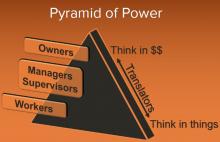
Quality experts estimate that 25-40% of dollars spent by typical businesses is waste. Companies focused on quality spend less, reduce waste, cut operating costs, and invest in processes that result in: greater profits; stronger financial position; improved competitive capabilities; operational stability; greater customer success/satisfaction, and setting trends for the industry. Simply put, no service-based industry has ever made less money by doing things right the first time. For owners, partners, operation managers, and supervisors.

Cradle to Grave: The Concealed Energy, Carbon and Water Impact of Buildings
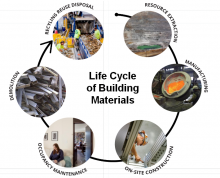
Buildings presently account for a third of the world's energy use, and the operational energy of buildings is projected to double between now and 2050. As the building sector grapples with its role in mitigating climate change, and environmental impacts more broadly, we must come to terms with a more holistic view of how building design, construction and use shapes the environment. All too often efforts to minimize environmental impacts of buildings focus solely on operational energy, carbon and water. However, this view neglects the concealed impacts across the wider building lifecycle: material extraction and manufacturing, transportation and logistics, construction, maintenance and disposal or reuse at end of life. This presentation will explore the cradle to grave environmental impacts of building materials, assemblies and whole buildings across a range of environmental impact categories. The session will discuss the increased use of Life Cycle Assessment (LCA) as an assessment methodology and present tools that can be used by designers to integrate iterative LCA into their design workflow. The presentation will also explore how life cycle tools and perspectives are being leveraged to broaden our sense of what NetPositive or regenerative design fully means, and to identify ways that we can put the NetPositive ambition into practice now as a guide to decisions in the buildings sector and beyond.

Cities: How are Our Neighbors Doing?

Cities play critical roles in achieving our climate goals, and proactive approaches toward energy efficiency and clean energy drive economic development, revitalization, and local job growth. This session will provide a detailed look at the efficiency and clean energy plans in some of NYC’s neighboring cities – Philadelphia, Yonkers, and Albany– and discuss lessons learned from efforts to advance energy solutions. Such participation in city-to-city networks and city-state partnerships are particularly effective ways to unleash innovative solutions.

Transportation Infrastructure: Where We Are, How We Must Change

Mass transit in and into NYC serves 15.1 million people, yet people still drive their cars into the City. The nation’s largest mass transit system helps reduce carbon dramatically in the City, and a new congestion pricing proposal is supported in NYC, but ignored in Albany. Learn from two experts about where we are and where we need to go to move people in and out of NYC.

Water: Life Blood of Our Infrastructure

NYC uses about a billion gallons of water per day, and the system that delivers it to our tap is both vast and frail, as is the system to dispose of and reuse our water. Water costs many owners more than energy, and sometimes property taxes. Learn about the system, NYCDEP incentives to reduce usage, successful retrofit projects, and the current and future state of NYC’s sewer system.

Passive House: Affordable, Retrofit, and Huge

Probably the most adopted newer certification in the building industry, Passive House is a US and international standard that small to very large owners are using to build and retrofit. Simple, affordable, and durable, this standard works in many types of buildings. Learn from four experienced practitioners about how smaller buildings are retrofitted, how affordable housing is built within budget, and how large scale dormitories and other buildings will be built in the future.

We the People...In Multifamily Buildings!

Studies have shown that human behavior is just as important to a building's performance as energy efficient systems themselves. Engagement and training for residents and building operators is often overlooked, as the focus is usually on installing advanced new energy efficient equipment. This panel-style session will explore challenges and real life examples of how resident engagement, operator training and behavioral awareness have reduced energy usage in multifamily buildings and created healthier, happier living spaces.

Living on the Edge: Resiliency, Energy, and Affordability

With every passing year, temperatures and storms are becoming more extreme in our region. Protecting both tenants and building systems requires a new way of thinking about floodproofing, thermal comfort, and power loss. Speakers will review best practices and design solutions that have been implemented in affordable housing developments and retrofits to address a wide variety of environmental stressors. Speakers will also explore the public and private sources used to fund the projects.

Energy Efficiency and Green Building Technologies - Made in Germany

Germany has established itself as an international market leader and innovation driver in the fields of energy efficiency and green building. This workshop will feature a select group of German organizations and companies presenting their latest innovative products and reference projects which incorporate energy efficiency solutions. Speakers include:

·         Dr. Kurt Roth, Director Building Energy Technologies at Fraunhofer CSE presenting emerging energy efficiency opportunities

The Future of Homebuilding Can't Wait: Making Sustainable, Low Energy Dwellings the Norm

It is said that homebuilding can look back at 300 years of history unimpeded by progress. It’s a bit of an exaggeration, but the energy-sucking, defect prone truth is unacceptable. Homeowners, society, and even the health of our planet have been underserved by the quality standard of our homes. As the vicious cycle of climate change accelerates, we must achieve a home quality paradigm shift now. That will mean thinking differently, acting differently, and doing differently.

Speaker: Tedd Benson, Bensonwood & Unity Homes

Electricity 101 - Understanding electricity markets and regulations in the Northeast

This workshop will explain the roles of legislatures, utility commissions, state energy offices and the Federal Energy Regulatory Commission in setting energy policy. It will explain day ahead and real time wholesale energy markets, capacity markets, and REC markets, and the role of Independent System Operators and the New England Power Pool. We will review how retail “standard offer” energy pricing is set and how transmission, distribution, transition, demand charges and other aspects of retail pricing are established. Energy professionals who don’t yet know this stuff should.

Sustainable Design for Developing Countries

This active-learning workshop will explore the challenges of sustainable design in developing countries.  Following a brief presentation and discussion of recent projects, participants will be divided into small groups for a charrette focusing on two current projects where resilient design and energy independence are critical.  One project is at the very beginning stage while the other is further advanced, leading to a variety of design challenges to address.  The workshop will conclude with group presentations and an open discussion.

Closing Forum: 100 Years of Experience

The closing forum will feature 6 Pecha Kucha 20x20 presentations (20 slides, each for 20 seconds) followed by a discussion moderated by Matt Root. Participants will include three sages—John Abrams, Chuck Silver and Terry Brennan and three rising stars - Declan Keefe, Ace McArleton and Stephanie Horowitz. In 90 minutes, this session will teach you more about building, design, business, and life than you could learn in 10 years on your own.

Applying Passive House Principles to 160 Units of Affordable Housing - Lessons Learned

Fairfax Gardens was a 150 unit dilapidated public housing development in Taunton, MA. The THA selected Trinity Financial to be the developer, owner and operator of a 160 unit replacement program on two sites. The Hope VI Program requires a very competitive funding application that includes strong sustainability incentives measured using Leed and/or Enterprise Green community checklist criteria. The Fairfax Gardens funding application was successful in part because it committed to very aggressive energy conservation measures.

Tiny Bubbles: The Deal With Spray Foam

“Is Foam Evil?”—that’s how this session was originally titled. Saner heads prevailed: foam is so highly insulating, so airtight, so slick on the jobsite, how could we ask such a question? Wait—it’s just those wonderful features that suck us in and make us love foam and forget about those toxic chemicals, occupational hazards, climate impacts, and faulty installations. Is that evil? Come discuss design choices, material options, and building science with our panel.