Building envelope

Can You Afford an SPF Failure? A Comprehensive Look at Assuring a Quality Foam Installation

As a building professional you take on a high level of risk when you use spray foam in your projects. Spray foam is the one of the few building materials we routinely use that is manufactured on-site; yet it is almost always installed without adequate quality control or the means to verify proper processing; and the consequences of material failures and/or inadequate protection of the occupants and the site can be catastrophic. That’s the bad news. The good news is that you can minimize the risks if you know what to require from installers and how to ensure that they use the proper safety protocols and quality control. This must-attend workshop will teach you everything you need to know and do to avoid problems with spray foam installations.

Diagnosing and Air Sealing Large Commercial and Institutional Buildings

If you want your large commercial or institutional project to meet your savings number, exceed energy performance goals, or get your label, you need to perform targeted air leakage diagnostics and actually fix the leaks. There are numerous other reasons to retrofit a buildings envelope including comfort, humidity control, infestations, component degradation or simply being able to control a building. One of the nation’s leading experts in this field will walk you through the hundreds of miles and millions of square feet of buildings that he has diagnosed and fixed over the last few years, and show you real results from real buildings. This day-long seminar will also provide the opportunity to discuss practical solutions to the problems encountered.

What should be done with this house?

What will your existing house look like in the year 2050, if it’s to be part of the solution to the energy and environmental issues we face rather than a continuing part of the problem? What’s the pathway to get it there over time – how might a “phased retrofit” break down into logical, cost-effective steps? In this workshop, two long-time practitioners (and homeowners) will lead the group through a series of case studies to develop master plans for a range of houses. We’ll be looking not just at the homes and their existing internal systems, but also the various external systems and networks the homes participate in – social, transportation, legal and zoning, energy, natural, etc. Participants will be encouraged to submit their own or clients’ homes to the workshop leaders in advance to be prepared as case studies for group discussion. This workshop is open to homeowners and professionals both.

The Elephant in the Room: How to Affordably Increase the Energy Efficiency of Our Existing Housing Stock
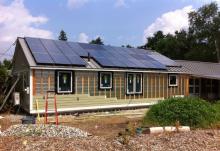
The biggest hurdle for energy efficiency in the built environment today is how to improve the energy efficiency of our existing housing stock in an affordable manner. These three practitioners bring several years of experience to the fore. They have seen what works, what doesn't, and why. The session will review the best building practices of how to view, evaluate and perform an energy upgrade to a property. Average square foot costs on energy efficiency return will be discussed and what can be the expected energy reductions from certain projects. This session will focus on some of the easier energy-efficiency upgrades to be taken now and what to put off to employ our next generation. Evaluation of the existing available financial resources to be used for offsetting the owner costs and how they might be improved. Lastly, they will address when a project is beyond the scope of affordability and what telltale signs to look for.

Airtightness Testing in Large Buildings
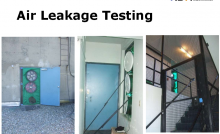
Airtightness testing has long—since the 1980’s—been used to test high-performance housing. The 2012 version of the International Residential Code requires testing of every new home. Recently there has been a growing trend of testing the airtightness of large buildings as well. This session reviews why one would invest in airtightness testing for a large building, how the testing is done, how the results are interpreted, and how this information can be used.

Roofs: Research and Reality

To vent or not to vent? To insulate outboard or inboard? To provide details or just let contractors wing it? These are some of the questions two pros, who spend a good portion of their work days crawling around on roofs (of both wood framed and masonry buildings), will address. They will share case studies of roof failures; go over edge and penetration details that are so critical for long-term durability; discuss how to take advantage of opportunities to improve thermal performance; and share some of the latest geeky research, including how to do an unvented assembly without code-mandated spray foam. You’ll leave this session knowing what works, what doesn't, and how to juggle budgetary, design or building constraints to build durable, low-risk roofs.

Sticky Business: The Truth About Tapes and What It Means for Your Enclosure
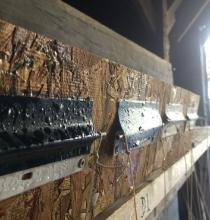
Pressure sensitive tapes (PSAa) can make or break the continuity of your air and weather barrier—ensuring a durable, high performing enclosure, or putting it at risk. Yet we have little way of knowing whether tapes will stand the test of time. We can’t visually inspect them once the cladding goes up. Nor can we rely on existing testing standards, which aren't suitable for the products used in construction and the cold, windy, wet, dirty conditions in which they are installed. Three years ago Peter and Dave took matters in to their own hands, setting up a testing facility to measure the performance of routinely installed products under field conditions. They will share the results of their testing and what it means for field practitioners.

Retrofit Like You Give a Sh*t: Inspiring Homeowners to Care about Efficiency

You care about the environment, climate change and sustainability. You want to do your part to make existing homes more energy efficient. But all your customers want are new kitchens, better bathrooms and big additions. What can you do? How can you help homeowners learn to value what they can’t see and begin to understand their house as a system? And equally important, how can you, on a limited budget, and in piecemeal fashion, move a house systematically toward greater energy efficiency? In this panel discussion, we’ll cover the following: educating homeowners about energy efficiency and the house as a system; making a long-term plan for energy upgrades over time; working incrementally to improve a home’s energy efficiency; and insuring that the way is clear for those who follow you.

What Contractors Need to Know About Spray Foam
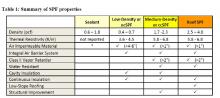
Spray foam is an essential tool in the high performance building toolbox, yet many builders have concerns about using the material including subpar installations; how to protect workers, occupants and spaces outside the spray zone; offgassing; the global warming potential of blowing agents, and even foam failures. In this session Kerry Koskinen, a seasoned remodeler, will interview Henri Fennell, a leading spray foam expert about what contractors need to know and to do to ensure safe, high quality installations. Common problems will be addressed as well as strategies for avoiding them. The session will conclude with an extended Q&A, so attendees are encouraged to come with questions.

Room-side Low-e Coating: As Good as It Sounds?
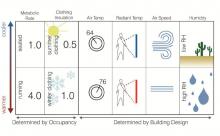
The selection of a glazing type for a project is based on factors like thermal performance, impact on occupant thermal comfort and cost. Double pane glazing units with a room-side low-e coating are becoming popular, because their thermal properties and visual appearance are comparable to those of a triple pane unit, but at a lower cost. However, the impact of selecting one over the other can have significant impact on seasonal thermal comfort conditions, and the wrong choice could lead to a need for perimeter heating as a remedial measure. This session addresses the benefits and drawbacks of using double pane glass with a room-side low emissivity coating as a substitute to a more expensive and heavier triple pane unit. In order to ensure no perimeter heating is necessary with either unit, we introduce a method to quantify two factors affecting occupant thermal comfort: radiant temperatures and risk of downdraft.

Break It or Lose It: Thermal Bridging in Building Envelopes
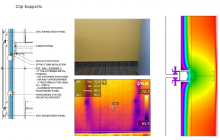
While thermal bridging is widely acknowledged to exist in modern commercial building envelopes, little is known on the significance of its impact. Utilizing infrared images taken from targeted assemblies at 15 recently completed buildings; we have seen a range up to 70% less than the design intended R-value. This range shows the unintended impact that design details can have on thermal performance. We identified 16 common areas of thermal bridging that were frequently observed in the buildings surveyed. Broken into two broad categories of façade systems and transitions / penetrations, they range from curtain wall systems, to existing wall renovations, to conditions such as parapets and transitions to foundation. The outcome of this research is a better understanding of thermal performance of commercial façades in order to help architects and building professionals understand the real impact of common thermal bridges and present alternatives to the industry standards that enhance performance.

A Prototype Visualization Tool for Hygrothermal Analysis
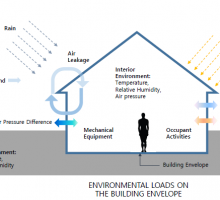
Recent developments in the field of building simulation and computing power are allowing architects to effectively move performance analysis of designs into the early stages of the design process. These developments aim to allow for the rapid iteration of design solutions that examine various performance criteria. This presentation describes a prototype tool that can serve as a platform to merge large amounts of building performance simulation data coupling various performance criteria. A case study using the prototype tool that uses WUFI engine to simulate moisture movement and analyze the related risk for mold growth and for building component failure using ASHRAE standards. The conclusions show that key insights can be quickly obtained using this tool, demonstrating its potential to increase our understanding of building performance. It also lays the groundwork for a more seamless integration of hygrothermal modeling into the whole building analysis process.

Air Leakage: What You See is Not What You Get
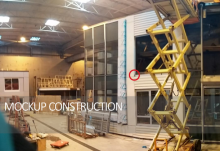
Air leakage is an important consideration in all construction. Tighter buildings are more energy efficient and comfortable. Although large buildings are rarely blower door tested, architects, enclosure consultants, manufacturers, and installers spend time and money to provide air tight buildings. Details within the contract documents and subsequent shop drawings indicate the intended location of the air barrier. However, over the course of mockup construction, mockup testing, and project construction, air leakage issues often arise that were not addressed prior, generally at unusual conditions and transitions. These locations can be difficult to detail and are typically overlooked. This presentation will first review the basics of air leakage detailing, and then provide specific examples where project documentation did not address air leakage sites, which were found in the field. Implemented field fixes will also be presented. Although project-specific, these case studies will demonstrate typical locations that must be carefully vetted during detailing.

How We Sleep at Night - Energy Metrics and Decision Making in Residential Design
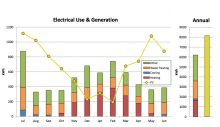
PHI stands by 4.75kbtu/sq ft/yr for AHD. PHIUS has recently reworked its performance standard. Energy Star now has Version III. Living Building Challenge requires net zero. Green building standards require differing guidance on annual heat demand and peak load. Learn from long time practitioners with experience in climate zones 5, 6 and 7 as they discuss their sweet spots for appropriate metrics in peak load and AHD. Laugh while the moderator mocks, tugs and cajoles the experts while teasing out the answers to life’s persistent questions (according to energy geeks).

When You Come to a Fork, Take It. Residential Choices and Performance
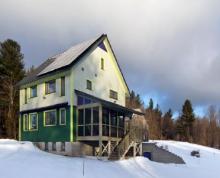
Decisons, decisions. Residential design is always part education, part therapy, and part architecture. This panel will showcase the work of two designers and a builder who have climbed high on the residential decision-making tree. Architect Chris Briley will explore the challenges of two Passive House projects, in the same climate, with different clients, as he worked with each to come to different conclusions and different strategies for the same high performance target. Jesse Selman and Kent Hicks (architect and builder) will discuss the complex process of navigating the sometimes conflicting goals of high performance, thoughtful design, and the needs of a client with an existing building, a beautiful site, and multiple chemical sensitivities.

Widening the Circle in High Performance Residential Design

Every project is a learning experience. On some projects, we set out deliberately to learn new tricks. Mark Doughty, a luxury home builder near Boston, sought out Zero Energy Design to help him design his own home. With ZED's Jordan Goldman, he got first hand experience in high performance home design, and will discuss how what he learned may influence what he builds for others. Architect Hank Keating sought out Mike Duclos, of DEAP Energy Group, to help him through his first Passive House project. From concept, construction and certification, Mike and Hank worked together to develop passive house strategies for a working farm, and to walk the talk through the sometimes steep learning curve that is Passive design.

On Eggshells: Residential Retrofits in Tricky Situations
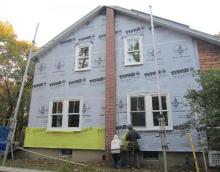
Seasoned practitioners tackle the difficulties of residential Deep Energy Retrofits. When an architect experienced with Net Zero and Deep Energy Retrofits (DERs) spends his own money on his house, things get tricky. Starting with a house that used 700 gallons of oil, Tom Hartman’s been working on it for fifteen years. Now it’s not quite super-insulated, pretty air tight, once haunted by flying squirrels, but now using almost no oil. With a young family whose financial priorities did not include a whole house renovation; this project is a case study of a DGR- damn good renovation. Outside Boston, David Foley and Paul Eldrenkamp ought to know better, but decide anyhow to attempt a DER on a 1928 home they thought WASN’T located in Historic Preservation District. This panel discussion will address the challenges – political, economic, and technical – of high performing renovations in existing housing stock.

Benefits of Cx and RCx: Compliant Buildings, Healthy People

This discussion will examine multifamily and commercial commissioning and retro-commissioning projects with an emphasis on: code compliance; increasing energy savings; preventing building system failures; resolving operations and maintenance issues; and improving indoor environmental quality (IAQ). The session presentations will describe some of the most common aspects of buildings, such as ventilation, to lesser-known measures, like user tools and resources available in the marketplace to start commissioning buildings for compliance, efficiency, and health.

Airsealing and Firestopping: Smart Science

Air leaks cause comfort, energy, fire, durability, and vermin problems throughout buildings. Recent studies have shown that: stack effect losses in high rise buildings leak large amounts of treated air (who knew?); airsealing as part of new construction helps meet performance standards and increase comfort; and airsealing individual apartments as part of retrofit projects saves occupants money and increases comfort in those units. Listen to three diverse presentations on methods and results in airsealing projects.

Lighting = Cash + Code

Lighting efficiency has increased substantially with technology inherent in LED’s, yet few buildings have come on board. Codes will drive changes in lighting down the road that should be addressed today. Daylighting is very important to use, insuring that its inherent heat gain does not negatively impact the building load. Listen to three leaders in the field discuss the newest technologies in existing lighting, lighting controls and code requirements, and effectively using daylighting.

Applying Passive House Principles to 160 Units of Affordable Housing - Lessons Learned

Fairfax Gardens was a 150 unit dilapidated public housing development in Taunton, MA. The THA selected Trinity Financial to be the developer, owner and operator of a 160 unit replacement program on two sites. The Hope VI Program requires a very competitive funding application that includes strong sustainability incentives measured using Leed and/or Enterprise Green community checklist criteria. The Fairfax Gardens funding application was successful in part because it committed to very aggressive energy conservation measures.

Tiny Bubbles: The Deal With Spray Foam

“Is Foam Evil?”—that’s how this session was originally titled. Saner heads prevailed: foam is so highly insulating, so airtight, so slick on the jobsite, how could we ask such a question? Wait—it’s just those wonderful features that suck us in and make us love foam and forget about those toxic chemicals, occupational hazards, climate impacts, and faulty installations. Is that evil? Come discuss design choices, material options, and building science with our panel.

Balancing Historic Preservation and Energy Performance

Historic New England’s approach to weatherization emphasizes preservation over intervention. But as shown by the energy retrofit that achieved an over 60% reduction in energy usage at the Lyman House, a National Historic Landmark, energy performance and preservation can co-exist. This session will discuss HNE’s preservation philosophy and how it guides the organization’s energy conservation projects. We will share an energy usage analysis of all 36 HNE properties and discuss how that information is used to prioritize actions.

Managing Moisture to Achieve Long-Life and Low-Maintenance

Designing for durability is essential for green buildings, because if you double the life of a building, regardless of construction type, you halve the environmental impact of its construction. In the design of buildings and building components to achieve long-life, moisture must be managed and understood, including the ability to have effective and efficient maintenance and repair. Drawing upon decades of hands on experience, two building scientists will present the nitty-gritty of good design that embraces and understands moisture. From the tried and true water shedding techniques of century old buildings to the shocking truth about pressure-sensitive tapes and liquid sealants, participants will learn how to handle moisture with low-tech physics and high-tech materials and tools.

Introduction to Building Science and Diagnostics

This overview of residential energy efficiency is appropriate for future auditors, would-be retrofitters, and anyone else who lives in a house. It starts with the basics of heat, air and moisture flow. Various insulation and air sealing materials are discussed. Heating fuels, heating systems, and hot water systems are compared. Common building performance problems and their solutions are outlined. There is a brief description of blower door testing and related diagnostics, along with suggestions for prioritizing recommendations.