Single family

Data Loggers for Advanced Diagnostics

Data loggers are tiny computers which record temperature, humidity, water flow rates, and other environmental parameters over a long timeframe. How can they be used to diagnose building issues? What are some tricks and tips for using data logging systems? The possibilities of these inexpensive and useful devices will be explored through case studies on condensation issues, air and hydronic HVAC, and building ventilation.

Biomass Design and Potential

 This course touches on some of the considerations one should make when designing and planing an automated biomass heating system.​ It will cover fuel choice and logistical advantages, equipment availability and pros and cons of different choices,  sizing for financial viability, and emissions implications of fuels, moisture content and combustion equipment. We will also take a quick look into the near future and discuss a few up-and-coming cogeneration options.


Living Building Challenge: Historic Building, Modern Lessons

The Living Building Challenge (LBC) can be applied to any building project, including historic renovation and new construction. Charley Stevenson and John Rahill will compare and contrast the LBC renovation of an 18th century plank building to the design and construction of several new LBC buildings.  By examining the three most challenging petals (water, energy and materials) they will illuminate the benefits of and the obstacles to LBC compliance.

Achieving Zero Net Energy Affordably Today: Mobile Home Replacement
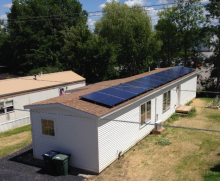
A modular home factory in Wilder, VT has opened to build zero-net energy mobile home replacement units. While there have been other efforts to replace mobile homes outside Vermont, they have done so with newer manufactured housing units that suffer from poor indoor air quality, high energy costs, and durability issues. This session will provide an overview of the issues with manufactured and mobile homes including financing and depreciation, attributes of the zero-net energy replacement modular home, the design and build process, and the comprehensive whole-house monitoring system. Detailed monitored energy and environmental data will be shared from two years of occupancy. The session will also discuss design challenges/constraints associated with cost, prefabrication, and transportation of a Modular/mobile home. We will present a comparative look at cost and energy with other related housing initiatives, as well as show the cost to benefit analysis of what it would take to bring the project to the Passive House level.

Navigating Product Selection: How to Find the Greenest Materials in the Age of Full Disclosure

Are you drowning in the arcane alphabet soup of product labels? Frustrated with inflated environmental claims from manufacturers? Unsure of the health and safety risks associated with your favorite building materials? Help is on the way! Join the experts from BuildingGreen, who have been researching and writing about green building products for 25 years. In this hands-on half-day workshop, you will learn how to cut through the b.s. and select safer, greener products, and you’ll get an in-depth understanding of the trove of information you can find in product disclosure tools like environmental product declarations, health product declarations, and the newly required safety data sheets. Understand the full context, get down and dirty with the devil in the details, and learn which information you can safely ignore. You’ll also glimpse some of the newest, most innovative products that are paving the way for a greener future, and you will leave with powerful educational materials to share with clients and other team members. Bring your questions, share your insights, and get ready for an enlightening and entertaining morning!

Whole Property Retrofit: Redesigning Suburbia for an Uncertain Energy & Food Future
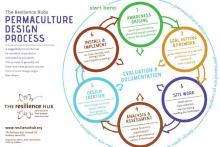
How do we turn the "problem" of suburbia into an enormous opportunity to create a set of resilient systems that can adapt to a changing world? Learn how a holistic design process and a whole-property retrofit in Maine has created a suburban model of living that requires significantly less time, money and energy to run while simultaneously enhancing the thermal comfort and well-being of the residents. This case study presents a transferable suite of findings on efficiency, renewables, integrated landscape elements, food production, transportation and “incremental deep energy retrofitting” which have weaned this eighty-year-old home completely off of fossil fuels.

Getting to Zero: Frameworks & Roadmap to help you achieve portfolio-wide performance improvements

The future of our planet and our profession depend on our ability to co-create collaboratively and achieve levels of synergy that transform our impact. Net Zero, the 2030 Challenge and LEED define performance targets. Yet, critical gaps remain between rising performance goals and the organizational capability to consistently achieve them. AIA 2030 data shows that 57% of gsf uses energy modeling, meaning 43% doesn’t. Most teams don’t know what the anticipated energy use is. Firms also report that LEED certified projects, which tend to have more commitment and higher levels of integration, have 24% lower pEUI than non-LEED projects, yet LEED still represents a small percentage of a firm’s portfolio. This session provides participants with frameworks and proven methodologies to transform their practice from “random acts of sustainability” to consistent capability based on cultural change, clearly articulated methodologies, truly integrative design and effective use of metrics to achieve continuous improvement.

Passive House Deep Energy Retrofits: Revitalizing Masonry Multifamily and Single Family Wood Frame Buildings
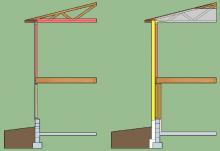
Michael Hindle and Matt Fine led a Passive House retrofit of three abandoned masonry apartment buildings on the Southeast side of Washington DC for low-income families. Designed to PHIUS+ standards, the renovation goal coupled with on-site renewables, and affordable housing tax credits, minimizes expenses for occupants - providing stability for resident families, while achieving nearly zero energy performance. The team designed and executed and external insulation strategy of I-joists and dense-pack fiberglass, with integrated window shading and airtightness. See the details, the processes and lessons learned. Chris West bought a raised ranch house in Jericho, Vermont. Built in 1976 the house has standard 2x4 construction (16 oc) filled with fiberglass, single pane windows, and tuck under garage. In 2010 Chris took the Passive House training. Stuck with some earlier bad choices, and issues typical to every retrofit, see how he implemented Passive House methodology and calculations, to reduce the heating load of the house by 75%.

Building Science Puzzles

No matter how long you’ve been a building practitioner, you never stop encountering building science head-scratchers. Assemblies that you thought you had meticulously detailed may leak. Materials that you thought would last decades may show signs of pre-mature failure. Systems that seem like they should work (or have worked in the past) don’t. This workshop will teach you how to identify, diagnose and solve building science puzzles for a variety of building types, including residential, commercial and institutional, constructed using both traditional and modern methods. The presenters will share a series of case studies and invite the group to work together to identify the problems and propose solutions. Participants will also have an opportunity to present their own puzzles for group discussion.

What should be done with this house?

What will your existing house look like in the year 2050, if it’s to be part of the solution to the energy and environmental issues we face rather than a continuing part of the problem? What’s the pathway to get it there over time – how might a “phased retrofit” break down into logical, cost-effective steps? In this workshop, two long-time practitioners (and homeowners) will lead the group through a series of case studies to develop master plans for a range of houses. We’ll be looking not just at the homes and their existing internal systems, but also the various external systems and networks the homes participate in – social, transportation, legal and zoning, energy, natural, etc. Participants will be encouraged to submit their own or clients’ homes to the workshop leaders in advance to be prepared as case studies for group discussion. This workshop is open to homeowners and professionals both.

The Elephant in the Room: How to Affordably Increase the Energy Efficiency of Our Existing Housing Stock
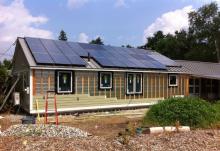
The biggest hurdle for energy efficiency in the built environment today is how to improve the energy efficiency of our existing housing stock in an affordable manner. These three practitioners bring several years of experience to the fore. They have seen what works, what doesn't, and why. The session will review the best building practices of how to view, evaluate and perform an energy upgrade to a property. Average square foot costs on energy efficiency return will be discussed and what can be the expected energy reductions from certain projects. This session will focus on some of the easier energy-efficiency upgrades to be taken now and what to put off to employ our next generation. Evaluation of the existing available financial resources to be used for offsetting the owner costs and how they might be improved. Lastly, they will address when a project is beyond the scope of affordability and what telltale signs to look for.

Roofs: Research and Reality

To vent or not to vent? To insulate outboard or inboard? To provide details or just let contractors wing it? These are some of the questions two pros, who spend a good portion of their work days crawling around on roofs (of both wood framed and masonry buildings), will address. They will share case studies of roof failures; go over edge and penetration details that are so critical for long-term durability; discuss how to take advantage of opportunities to improve thermal performance; and share some of the latest geeky research, including how to do an unvented assembly without code-mandated spray foam. You’ll leave this session knowing what works, what doesn't, and how to juggle budgetary, design or building constraints to build durable, low-risk roofs.

The Value of R-Value and NPV of PV: Selling High Performance Homes in an Indifferent Market
The ideal client hires you to build a net zero energy home, or to complete a deep energy retrofit of their existing home. Two questions arise: How will the energy efficiency improvements impact the value of the construction loan? How much value is added to the home when it’s time to sell? These improvements change the value of the home and the perception of the home by potential buyers. It is up to the real estate agent, the appraiser, and the seller to understand and convey the potential value to a buyer. Learn from leading advocates, market participants, and analysts about the contributory value of energy efficiency improvements and energy producing technologies like solar and geothermal. Find out how these improvements increase homeowner equity and how they translate at the point of sale. Overcome the barriers preventing realizing value for efficiency in real estate transactions.

Passiv for the Masses

Climate change has made mainstream adoption of high-performance buildings a priority, and the Passivhaus standard provides a means to assess and drive the performance of these buildings. With 16 certified Passivhaus buildings between them, industry leaders Adam Cohen, Alan Gibson and Mathew Omalia will discuss their experiences designing and constructing a wide spectrum of building types, styles and scales that meet the Passivhaus standard. Adam Cohen will discuss techniques used to design, manufacture and construct Passivhaus buildings that cost the same or less than comparable code buildings. Alan Gibson will talk about simplifying construction systems and assemblies, and lessons learned about structure, moisture, air sealing, and air quality. Matt Omalia will explore how to integrate Passivhaus parameters into the design process to create a new canon of architectural design. The presenters will use case studies including: single and multi-family homes, schools, university residence halls, and community buildings.

Retrofit Like You Give a Sh*t: Inspiring Homeowners to Care about Efficiency

You care about the environment, climate change and sustainability. You want to do your part to make existing homes more energy efficient. But all your customers want are new kitchens, better bathrooms and big additions. What can you do? How can you help homeowners learn to value what they can’t see and begin to understand their house as a system? And equally important, how can you, on a limited budget, and in piecemeal fashion, move a house systematically toward greater energy efficiency? In this panel discussion, we’ll cover the following: educating homeowners about energy efficiency and the house as a system; making a long-term plan for energy upgrades over time; working incrementally to improve a home’s energy efficiency; and insuring that the way is clear for those who follow you.

Home Performance Insights from Big Data at NEST

Connected devices like the Nest Learning Thermostat provide an unprecedented amount of data about home energy usage patterns. This data can be used to further our understanding of how homes really work, and to help us identify both opportunities for and barriers to improving home performance. This session will present insights gleaned from analyzing large-scale anonymized data collected by Nest thermostats, and discuss the significance of these insights for the home performance industry. Topics to be addressed include: variations in HVAC run times with weather, real-world sizing of heating and cooling equipment, indoor temperature and humidity variations by season, and heat pump performance characteristics.

How We Sleep at Night - Energy Metrics and Decision Making in Residential Design
PHI stands by 4.75kbtu/sq ft/yr for AHD. PHIUS has recently reworked its performance standard. Energy Star now has Version III. Living Building Challenge requires net zero. Green building standards require differing guidance on annual heat demand and peak load. Learn from long time practitioners with experience in climate zones 5, 6 and 7 as they discuss their sweet spots for appropriate metrics in peak load and AHD. Laugh while the moderator mocks, tugs and cajoles the experts while teasing out the answers to life’s persistent questions (according to energy geeks).

When You Come to a Fork, Take It. Residential Choices and Performance
Decisons, decisions. Residential design is always part education, part therapy, and part architecture. This panel will showcase the work of two designers and a builder who have climbed high on the residential decision-making tree. Architect Chris Briley will explore the challenges of two Passive House projects, in the same climate, with different clients, as he worked with each to come to different conclusions and different strategies for the same high performance target. Jesse Selman and Kent Hicks (architect and builder) will discuss the complex process of navigating the sometimes conflicting goals of high performance, thoughtful design, and the needs of a client with an existing building, a beautiful site, and multiple chemical sensitivities.

Widening the Circle in High Performance Residential Design

Every project is a learning experience. On some projects, we set out deliberately to learn new tricks. Mark Doughty, a luxury home builder near Boston, sought out Zero Energy Design to help him design his own home. With ZED's Jordan Goldman, he got first hand experience in high performance home design, and will discuss how what he learned may influence what he builds for others. Architect Hank Keating sought out Mike Duclos, of DEAP Energy Group, to help him through his first Passive House project. From concept, construction and certification, Mike and Hank worked together to develop passive house strategies for a working farm, and to walk the talk through the sometimes steep learning curve that is Passive design.

On Eggshells: Residential Retrofits in Tricky Situations
Seasoned practitioners tackle the difficulties of residential Deep Energy Retrofits. When an architect experienced with Net Zero and Deep Energy Retrofits (DERs) spends his own money on his house, things get tricky. Starting with a house that used 700 gallons of oil, Tom Hartman’s been working on it for fifteen years. Now it’s not quite super-insulated, pretty air tight, once haunted by flying squirrels, but now using almost no oil. With a young family whose financial priorities did not include a whole house renovation; this project is a case study of a DGR- damn good renovation. Outside Boston, David Foley and Paul Eldrenkamp ought to know better, but decide anyhow to attempt a DER on a 1928 home they thought WASN’T located in Historic Preservation District. This panel discussion will address the challenges – political, economic, and technical – of high performing renovations in existing housing stock.

BQDM: Retrofitting for Reliability

From Brownsville to Woodhaven, new policies and practices that are changing how we identify, finance, and implement energy conservation projects. This session will provide an overview of Con Edison’s Brooklyn Queens Demand Management (BQDM) program then dive into the innovative strategies that are improving grid reliability and savings dollars. From big to small, commercial to residential, we’re covering it all.

The Future of Homebuilding Can't Wait: Making Sustainable, Low Energy Dwellings the Norm

It is said that homebuilding can look back at 300 years of history unimpeded by progress. It’s a bit of an exaggeration, but the energy-sucking, defect prone truth is unacceptable. Homeowners, society, and even the health of our planet have been underserved by the quality standard of our homes. As the vicious cycle of climate change accelerates, we must achieve a home quality paradigm shift now. That will mean thinking differently, acting differently, and doing differently.

Speaker: Tedd Benson, Bensonwood & Unity Homes

Tiny Bubbles: The Deal With Spray Foam

“Is Foam Evil?”—that’s how this session was originally titled. Saner heads prevailed: foam is so highly insulating, so airtight, so slick on the jobsite, how could we ask such a question? Wait—it’s just those wonderful features that suck us in and make us love foam and forget about those toxic chemicals, occupational hazards, climate impacts, and faulty installations. Is that evil? Come discuss design choices, material options, and building science with our panel.

Balancing Historic Preservation and Energy Performance

Historic New England’s approach to weatherization emphasizes preservation over intervention. But as shown by the energy retrofit that achieved an over 60% reduction in energy usage at the Lyman House, a National Historic Landmark, energy performance and preservation can co-exist. This session will discuss HNE’s preservation philosophy and how it guides the organization’s energy conservation projects. We will share an energy usage analysis of all 36 HNE properties and discuss how that information is used to prioritize actions.

Sensible Solutions to Latent Problems: Managing Humidity in High Performance Homes

Low-load homes struggle with summertime humidity more than conventional homes, and the Northeast isn’t getting any less tropical.  Let’s get ready.  We will consider how latent and sensible loads differ for low-load homes, how to calculate required equipment performance, and what our equipment options are.  After reviewing the basics of the psychrometric chart, we’ll use it as our playbook, loading it with zippy-looking graphics galore.  We will also present monitoring from recently built low-load homes.